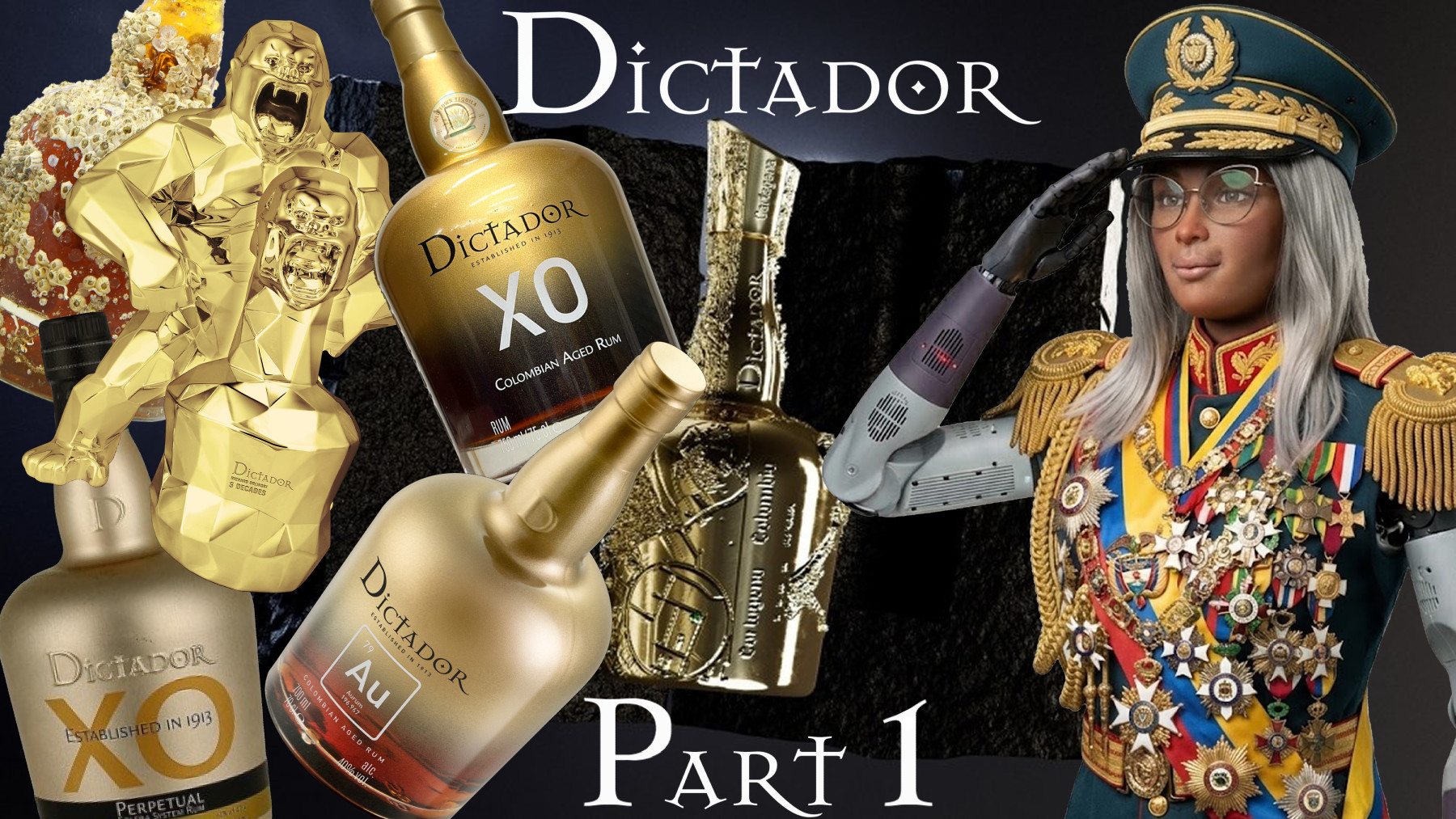
From Colombia with Love In 1751, a young Severo Arango y Ferro was dispatched to Cartagena de Indias, a major city in Nueva Granada.^1^2 His assignment: improve trade and collect taxes for the Spanish crown in a territory plagued by indigenous rebellions and rampant smuggling.^2 He executed this mandate with such ruthless brutality that he earned the nickname El Dictador (The Dictator).^1^2 Naturally, the man had his vices. Upon arriving in the New World, he fell in love with a sweet tropical elixir the locals called ron.^1 From that moment, his career pivoted from brutal tax collection to producing and trading elegant, high-quality rums under his namesake brand: Dictador.^1 This kind of origin story is not unheard of in the rum world. Historic traders like Martin Doorly and William McCoy were indeed immortalized as brands still sitting on shelves today (Doorly's and The Real McCoy, respectively). According to the brand, the descendants of Arango y Ferro continued his legacy. Don Julio Arango y Parra, a descendant of El Dictador, inherited the company and built a distillery in Cartagena in 1913.^3 This proudly Colombian distillery remains in operation today under Hernán Darío Parra Arango, boasting some of the world's largest reserves of aged rum.^4 The spirit is aged for decades using the solera method, and is even aged on ships, where the rocking motion of the waves supposedly matures it just as it did in seafaring days.^5 This absolute nectar of the gods is then bottled in stunning vessels worthy of its majesty, such as a solid gold bottle worth $1.5 million,^6 or a lumpy monkey.^7 To top it off, they hired Will Smith as global artistic director,^8 appointed an AI named Mika as CEO,^9 and, to protect their treasure, developed the world's most advanced anti-counterfeiting system built directly into their bottles.^10 --- The Ghost of Cartagena For context, in Colombia, it is very common to have two surnames: the father's surname followed by the mother's (which is often dropped in casual use, like the middle name). Hence, Hernán Darío Parra Arango is called Hernán Parra in all but the most formal legal contexts. Ángel Núñez Martínez, likewise, is almost always shortened to Ángel Núñez. This is where most promotional brand profiles end. But if we rewind and subject the story to even a modicum of historical scrutiny, the myth quickly unravels. Dictador presents itself as a century-old Colombian rum distillery sitting on a massive stock of exceptionally old spirit. However, when you separate the brand's claims from independently documented corporate, production, and trade records, surprisingly little survives intact. Who was El Dictador, really? Searching for Severo Arango y Ferro yields nothing but puff pieces and paid brand promotions. In fact, I could find no digitized record of this name prior to 2010. For a senior Crown official charged with overseeing trade between a Spanish colony and the motherland, you would expect at least a trace in the historical record. But even if he existed, it is highly unlikely that he would have openly declared his love for rum or engaged in its trade. Spain strictly regulated spirit production in its colonies as a protectionist measure for its domestic wine and brandy industries.^11 By 1736, fifteen years before his arrival, Spain had forced a monopoly on cane spirit distillation throughout New Granada, granting it to a single individual per region. By 1776, fifteen years after his arrival, private production was banned outright.^49 Producing and trading spirits would have been the exact crime he was sent to stomp out, and openly declaring a love for contraband would have been unthinkable.^11 Subjects of the Spanish Empire went to war and shed blood repeatedly throughout the empire's history just to secure the right to distill spirits.^11 Furthermore, historical records show Cartagena was a hub for French smugglers illegally importing rum, not a source of it.^11 Also, as I noted in , rum of this era was far from the "sweet tropical elixir" advertised today. It was harsh, barely drinkable, almost never aged, and frequently masked with strong herbs and spices just to make the intoxicant palatable. No one was drinking it for the flavor. --- A Borrowed History Founding Destilería Colombiana Though the original founder of the Dictador brand appears to be a marketing invention, the company claims that Hernán Parra's grandfather, Don Julio Arango y Parra, created the distillery in 1913, and that the family has been distilling ever since.^3^12 In an interview with the Consul Honorario Stuttgart, Hernán Parra states that his family has long been involved in the wine and spirits business, including work at Aguardiente Antioqueño.^12 Due to strict government monopolies, his family was barred from distilling liquor for the market, so they imported wine and spirits and produced Cinzano.^12 However, following the 1985 Armero volcanic eruption, the government deregulated the industry to loosen the monopoly and encourage investment, prompting his family to build a distillery in the Tolima department.^12 According to Parra, the family sold this company to the wine and spirits importer IDV (later bought by Diageo) in 1993. As part of the sale, they agreed to a 10-year non-compete clause in the liquor industry.^13 It wasn't until 2006 that he decided to launch his own brand.^12 The Family Business That Is Not Old There is indeed a record of a family business Parra was involved in. The earliest I can find is Premiun Brands Ltda. (sic), an agriculture and livestock trading company established in 1991 in Bogotá.^66 Records identify Darío Parra Colorado and Nohemy (also spelled Noemí) Arango de Parra as the founders. Given Colombian naming conventions, it is highly likely we have found the parents of Hernán Darío Parra Arango. Hernán was likely roped into the business early, as a 2001 lawsuit by Banco del Estado names both Darío Parra Colorado and Hernán Darío Parra Arango as defendants.^67 The family did indeed enter the liquor business around the turn of the millennium, as Darío Parra Colorado was listed as a shareholder in La Cava del Parque Wine & Spirits Ltda. in May 2002.^69 On September 11, 2000, Hernán Parra and his brother, Julio, started the liquor company Grandes Marcas Ltda. Cervezas Vinos y Licores.^44^76 I could find no evidence corroborating Parra's account of the family's alleged sale to IDV. However, if they became involved in Grandes Marcas in 2000 and La Cava del Parque in 2002, that would overlap with the 10-year non-compete clause stemming from a hypothetical 1993 sale. Parra making claims that I cannot verify, coupled with a lack of even internal consistency, is going to be a recurring pattern. But wait, who was Don Julio Arango y Parra, and what business was actually founded in 1913? The Old Business That Is Not Family Across Dictador's promotional materials today, you will see the claim that Don Julio Arango y Parra founded the distillery in 1913. However, this narrative only emerged later on. In earlier marketing materials, the brand claimed the distillery was founded by a Don Ángel Núñez.^42^43 They cannot both be true, so who is this Don Ángel Núñez? For a while, I assumed he was just another made-up name, though that didn't make much sense, as his name bears no resemblance to the current master blender's. That changed when I petitioned the SIC (Superintendencia de Industria y Comercio) for any information on file regarding Destilería Colombiana Established in 1913 Ltda., Dictador Colombia SAS, Ron Baluarte, or related entities. That is when I struck gold: a documented history showing that the Ron Baluarte brand was sold by Licorera Colombiana Ltda. to Destilería Colombiana in October 2008.^61 Most interestingly, Licorera Colombiana Ltda. had trademark requests for the labels that they used, and there it is, right on the labels: Angel Nuñez and Desde 1913 (Since 1913).^62 On the last page of that document, it references the succession proceedings of the late Ángel Núñez Martínez. With that name, I was finally able to pin down the history. The company, La Licorería (now spelled Licorera) Colombiana, was founded by Magín (also spelled Majin) Just Miret and Ángel Núñez Martínez in 1915.^63 They reference 1913 on their labels, so it is plausible that they officially registered the business two years into their careers, or perhaps it was because the Cartagena Chamber of Commerce itself was created in 1915, making that the earliest any business could have been recorded. There's no evidence that they operated a rum distillery. The records instead document a wine and liquor business importing European products and producing or blending wine and other alcoholic beverages.^63 Shortly thereafter, in 1923, Magín Just passed away.^70 Following a rocky liquidation that reached Colombia's Supreme Court, Núñez took over the company's assets and liabilities.^64 By 1933, the business was listed in the Álbum de Cartagena de Indias. A 1952 advertisement names Angel Nuñez Martinez and claims 1913 as the founding year.^64 Documents show that the commercial entity was canceled in 2008.^66 It is hard to say exactly what caused its closure, but its final years were marked by numerous lawsuits. They were sued by Banco de Occidente, Empaques Industriales Colombianos, and Bancolombia (twice), among others, while Licorera Colombiana also countersued Banco de Colombia.^67 So, we know that there was a wine and liquor company in Cartagena that folded around 2008. But from what I can gather, they did not have a distilling operation. Their records only show the importing of wine and spirits, and occasionally blending them. So what, exactly, can Parra rightfully claim? We know that in 2006, Parra purchased the company.^76 Prior to that, it was owned by the Castillo/Gaviria/PROA group and represented by Germán Lemaitre Noero.^68 As part of the transfer, there were instructions to fire everyone and settle all outstanding liabilities.^76 As a spot-check, I searched LinkedIn, and of all the employees I could find who listed Licorera Colombiana, none went on to work for Destilería Colombiana. We also know that the trademark for Ron Baluarte was transferred to the newly minted Destilería Colombiana in November 2008.^61 In the same transaction, they acquired the trademarks for the liqueur Cupido and the blended whiskey White Sand, both of which Destilería Colombiana allowed to lapse, never renewing them. One month later, in December 2008, Parra stepped down as manager, selling the company to two new owners.^78 The company would fold shortly afterward. Parra was only involved with the company for less than 2 years, and of everything that constituted Licorera Colombiana, the only thing I can find that passed to Destilería Colombiana was three trademarks, and Parra threw away two of them, with only Ron Baluarte eventually morphing into Dictador.^65 There does not appear to be a blood connection, as not only are the surnames completely different, but also under Brandy Federico II, the description reads "Uno de los legados de la familia Núñez" (One of the legacies of the Núñez family), which would be a strange way to phrase it if it were your own family.^72 Besides those, the product list also includes vodka, gin, aguardiente, and aperitifs. That reads like a regional blender and bottler, and among the portfolio are Ron Viejo Colombia and Aguardiente Amazonas,^72 which were products originally registed to Grandes Marcas.^73 So I don't see how Destilería Colombiana can claim any greater connection to Licorera Colombiana than to Parra's Grandes Marcas company, which has a founding date in this millennium. On top of that, we get a glimpse of how the names Julio Arango y Parra and Severo Arango y Ferro came to be. Hernán Darío Parra Arango has a brother, named Julio Severo Parra Arango.^77 One of the long-running officers of the company, and owner of 80% of the shares of Destilería Colombiana, is Tatiana Díaz Ferro.^79 Now it seems like the building blocks to form Julio Arango y Parra and Severo Arango y Ferro line up nicely. I have found no records of anyone, Destilería Colombiana or otherwise, acquiring any liquidated equipment or inventory from Licorera Colombiana. This further proves the point that Destilería Colombiana is not, in any sense, a continuation of that business. In every interview I reviewed, Hernán Parra has never once named the actual company whose history he claims: Licorera Colombiana Ltda. However, it actually is mentioned on the Ron Baluarte website.^71 According to ronbaluarte.com, which was archived in 2009-2010 and went offline by 2011, they confirm the Ángel Núñez and Licorera Colombiana story, and admit that Parra only took over the company 5 years ago (from the time of writing).^71 Nowhere does it mention Don Julio Arango y Parra or a distillery of any sort. The true story was the one they originally posted, then slowly they erased the truth and replaced it with their preferred marketing. > "estamos haciendo una nueva historia"("We are making a new history")- ronbaluarte.com/historia Speaking of which, Ron Baluarte was made from imported, blended rum under Licorera Colombiana. So where is Destilería Colombiana's, well, distillery? --- Where Is The Distillery? For a brand that heavily advertises its Cartagena roots, you might expect its Cartagena address to be a distillery. Instead, the registered business address (and the one listed on import records) is just a generic office building. Tolima Department Where is the distillery that Parra claims his family built in the Tolima department following the 1985 Armero volcanic eruption?^12 Parra states this facility is located in Ibagué. As it turns out, a distillery did indeed open in Ibagué in 1985. However, there are two glaring problems with this narrative. First, the Fábrica de Licores del Tolima opened its new facility in March 1985, eight months before the Armero eruption occurred in November.^53 Second, this is a state-owned distillery, not a private one. Could a private distillery have been built under a post-disaster deregulation effort? Unlikely. A few months after the eruption, the Colombian government passed Decreto 1222 de 1986.^54 Rather than loosening restrictions to encourage private investment, this decree explicitly reinforced departmental monopolies over liquor production, which remained firmly in place until 2016. A private distillery, De Sargo S.A., did indeed open in 1979, but it was noted as an exception and was the only private company allowed to produce potable alcohol in Colombia at the time.^57 Furthermore, it was built in the Cesar department, not Tolima. Is it possible that Dictador is commissioning rum from Fábrica de Licores del Tolima? I checked their website, including their page of "allied companies", and Dictador is not listed anywhere.^21 I can find zero evidence of Dictador's connection to the official state-owned distillery in Tolima, and ample evidence that they could not have owned a separate private one. Cesar Department According to Diego Quintero Jaramillo, Dictador's sales director, the original Cartagena distillery was abandoned at some point, vaguely blaming Colombian laws.^19 A new facility was supposedly opened in 1951 in the Cesar department.^19 It primarily produced fuel alcohol, and when demand fell, the vast majority of the facility was abandoned, only operating at 20% capacity to produce the lighter, 96% ABV neutral spirit that forms the base of their blends.^19^12 Today, this distillery sits adjacent to an airstrip and serves as the location for Dictador's "Art Masters" videos, where influencer artists are flown in to decorate it with graffiti.^20 However, visual evidence undermines the brand's claims. As Cyril of DuRhum first pointed out, the facility photos provided by Parra do not align with the described production: the site appears old, small, and conspicuously lacks pot stills.^22 Parra's description of fermenting sugarcane to 14% ABV and then distilling it four times in pot stills struck both Cyril and independent distillers as highly irregular, if not outright fabricated.^22 This is the Cesar distillery: the very same facility used for art promo videos, which allegedly still houses an active column producing 96% ABV light rum. Below are the photos Parra sent, alongside corresponding locations pulled from their promotional videos: Distillery image from DuRhum. Still from Dictador Art Masters. Distillery image from DuRhum. Still from Dictador Art Masters. Instead of any permanent presence, Dictador just hangs a banner up with their logo during filming. Using the Art Masters videos and the general location, I was able to pinpoint the exact location of this distillery. It is in Pororo, Agustín Codazzi, and it has an interesting history. Ingenio Meléndez S.A. was a sugarcane plantation and distillery that operated from the 1940s until 1976.^55 Meanwhile, in 1955, Arturo Sarmiento established an agricultural operation in Pororo that was later incorporated as Central Sicarare S.A.^56 It began producing sugar in 1963, and in 1976, the Sarmiento family built a distillery under the company De Sargo S.A., using second-hand equipment from the shuttered Ingenio Meléndez to produce 96% alcohol starting in 1979.^56^57 In 2007, the company decided to cease sugarcane operations and switch to palm oil, forming Extractora Sicarare S.A. and Palma Sicarare S.A., while Central Sicarare ended operations in 2008.^56 A new production facility was built adjacent to the old sugar facility, while the old industrial operation was subsequently liquidated.^57 The equipment at Central Sicarare was sold,^59 but while De Sargo also went up for liquidation, it remained in limbo for years.^60 Judging by the Art Masters videos, my guess is that the equipment never found a buyer. The images show a completely abandoned and dilapidated distillery, with aging equipment left rusted and unmaintained. I cannot imagine that it is producing alcohol in any capacity at this point, let alone the 20% that Dictador claims. I do not even know if Dictador currently owns it. I could find records of a sale for the liquidated sugar refining equipment, but not for the distillery's facilities or equipment, which now appear to lie in ruins. Critically, it certainly wasn't owned by them in 2015, when Parra showed pictures of it to Cyril claiming it was their distillery, as we know it was still being liquidated at the end of 2017. --- The Panama Papers But even if we grant them the abandoned Cesar distillery, we still lack evidence of active rum production there, let alone a second distillery with the pot stills Parra claims to use. What we do have confirmation of is Cyril's previous finding that Destilería Colombiana purchased bulk alcohol from Panama into 2014 and 2015.^22 Image from DuRhum. I did my own digging and found further records of them buying 65% ABV alcohol stretching into 2018, from the same supplier as in Cyril's reporting: Consorcio Licorero Nacional S.A. (CLNSA, aka Las Cabras distillery) in Panama.^35 Ron Baluarte's website also says that the rum is continuous-distilled to an ABV of 65%,^74 which doesn't make much sense, as multi-column stills used in light Spanish-style rum production typically output new-make spirit from the high 80s up to 96% ABV, but it makes perfect sense if they're just buying bulk alcohol watered down to 65%. Ironically, Dictador's website states that "the production process is entirely based in Cartagena", which raises an obvious question about how this squares with the company's description of its Tolima and Cesar facilities as operating distilleries.^38 Given these discrepancies, some rum experts and enthusiasts classify Dictador not as a distillery, but as a non-distilling producer^23 or a ghost distillery.^22 But these imports become a bit less surprising when you realize that they also sell cigars and coffee.^37 Their cigars come from the Dominican Republic, and I don't suppose they grow their own coffee, either. --- The Man Behind the Curtain Parra has spoken about "kissing many frogs" before finally finding his prince in 2006, in the form of some Polish entrepreneurs.^13 In 2007, Parra registered a company called Destilería Colombiana Established in 1913 Ltda.,^16 literally putting "Established in 1913" in its legal name. The address this company is registered to is a generic industrial park in Mamonal, Cartagena. In 2009, Dictador Europe Sp. z o.o. was registered in Katowice, Poland, with Tomasz Jerzy Bogdański as director, Marek Szołdrowski as president, and Gordena Investments Ltd. owning 98% of the shares.^17^46 Gordena itself is an offshore company registered in Cyprus in 2007, also directed by Bogdański, with its shares split 50/50 between Sky Development and Warmenbad Investments, both of which also list Bogdański as director.^18 In 2010, Warmenbad took over all of Gordena's shares.^18 Later, the shares shifted to Tranomtana Limited (which is just Warmenbad renamed), before finally landing in the hands of Dictador Holding Limited OÜ, whose direct owners are Marek Szołdrowski (president of Dictador Europe since 2009) and Hernán Parra.^46^47 The TL;DR is that Dictador's ownership is a matryoshka doll of holding companies, with the same few names constantly reappearing. It looks less like a family business and more like a corporate escape room. How it feels trying to piece together the org chart of Dictador. Enter Mariusz Jawoszek, a Polish entrepreneur and chairman of lingerie company Esotiq & Henderson, among other ventures.^14 Some sources state that Jawoszek purchased Destilería Colombiana Established in 1913 Ltda. and the "Dictador" brand,^9^23 however, I could only find him having majority ownership of Dictador, not Destilería Colombiana. While details on him are scarce, a 2023 interview with Puls Biznesu featured Szołdrowski stating that Jawoszek holds a majority stake in Dictador, with Parra retaining a significant stake.^50 As previously mentioned, Tatiana Díaz Ferro owns 80% of the shares of Destilería Colombiana Established in 1913 Ltda, with the remaining 20% owned by Coffee and Spirit Group S.A.S.^79 The entire ownership model operates as a corporate shell game. Records show that Dictador Europe sells glass bottles to Destilería Colombiana^39 (despite their website claiming that they are Japanese)^75 and pays them in advance for exports.^41 Then there is Dictador Colombia SAS, another entity whose supplier is Dictador Europe, and whose top buyer is Destilería Colombiana.^40 Legally, these are three totally separate entities, with Destilería Colombiana controlling the production of rum, Dictador Europe owning the trademark and distribution rights for Dictador rum, and Dictador Colombia SAS handling the logistics, such as importing bottles and exporting the bottled rum. The history is opaque, and the ownership model is a labyrinth. But that still doesn't answer the question that actually matters: what, precisely, is Destilería Colombiana putting in these bottles, and does it match what is printed on the label? . --- Editor's Note This investigation relied on publicly available corporate records, import/export databases, lab analyses, and marketing materials. Dictador did not respond to requests for comment. Production figures and the current operational status of the facilities described by Dictador as its distilleries could not be independently verified. Dictador was contacted in March 2026 with specific questions about their production methods and historical claims. They did not respond. They were contacted again in September 2026 with simply a request to discuss the production methods and historical claims with the proper point of contact, without asking any pointed questions immediately. They still have not responded. --- ^1: Dictador - Ultimate Rum Guide(https://ultimaterumguide.com/dictador/) ^2: Dictador - Fine + Rare(https://www.frw.co.uk/producer/612ec280060000000000215c/dictador) ^3: Así son los rones del Caribe Colombiano - El Heraldo(https://www.elheraldo.co/tendencias/2015/05/11/asi-son-los-rones-del-caribe-colombiano-194817/) ^4: Dictador Brand Presentation Masterclass - Dictador(https://media.dictador.com/download/dictador-brand-presentation-masterclassproductionproducts-pdf/) ^5: How Is Rum Made? - Dictador(https://dictador.com/how-is-rum-made/) ^6: Dictador Unveils $1 Billion Rum Collection With Each Bottle Made of 24 Karat Gold and Starting at $1.5 Million - The Daily Pour(https://thedailypour.com/article/dictador-most-expensive-rum-billion-24-karat-gold/) ^7: Lilac Dictador Game Changer(https://dictador.com/wp-content/uploads/2024/12/lilac-dictador-game-changer.webp) ^8: Dictador, lujoso ron cartagenero vendido en 80 países, contrató a Will Smith como director artístico(https://www.valoraanalitik.com/dictador-lujoso-ron-cartagenero-will-smith/) ^9: Dictador Europe - Rum Auctioneer(https://rumauctioneer.com/learn/explore-rum/companies/dictador-europe) ^10: How the industry is tackling fake alcohol - The Spirits Business(https://www.thespiritsbusiness.com/2023/04/how-the-industry-is-tackling-fake-alcohol/) ^11: History of Cuban Rum 1. Forbidden Beverages - Got Rum?(https://www.gotrum.com/the-rum-university/rum-in-history/history-of-cuban-rum-1-forbidden-beverages/) ^12: Destilería Colombiana(https://consulhonorariostuttgart.de/sites/default/files/produkte/rumdestilleriedestileriacolombiana/DestileriaColombianaInterview.pdf) ^13: Unser Ururur-Grossvater, der Diktator - Manuels(https://manuels.ch/explorer/impressionen/unser-ururur-grossvater-der-diktator) ^14: Mariusz Jawoszek(https://www.marketscreener.com/insider/MARIUSZ-JAWOSZEK-A0JKWO/) ^15: SUPERINTENDENCIA DE INDUSTRIA Y COMERCIO LISTADO INFORMATIVO(https://serviciosweb.sic.gov.co/Soluciones/Sic/listadoPI/pdf/ListadoSignos2015-09-22.pdf) ^16: DESTILERIA COLOMBIANA ESTABLISHED IN 1913 LTDA(https://www.lasempresas.com.co/cartagena/destileria-colombiana-established-in-1913-ltda/) ^17: DICTADOR EUROPE(https://rejestr.io/krs/330671/dictador-europe) ^18: GORDENA INVESTMENTS LIMITED(https://cyprusregistry.com/companies/HE/201469) ^19: Dictador Rum Virtual Tasting(https://www.youtube.com/watch?v=XcEcymNeJbM) ^20: Colombian Rum: Diego Quintero Jaramillo of Dictador Rum - Food for Thought(https://foodforthought.com.my/colombian-rum-diego-quintero-jaramillo-of-dictador-rum/) ^21: Fabrica De Licores Del Tolima - Clientes Aliados(https://www.fabricadelicoresdeltolima.com/inicio/clientes-aliados/) ^22: Rhum Dictateur - DuRhum(https://durhum.com/rhum-dictateur/) ^23: Rum Brand Reference - Who Makes and Owns the Brands - Rum Wonk(https://www.rumwonk.com/p/rum-brand-reference-who-makes-and?open=false%C2%A7dictador-non-distilling-producer-colombia-poland) ^24: NTC 278: Requisitos para el Ron Colombiano(https://www.scribd.com/document/367472596/NTC-278-Ron-pdf) ^25: Dictador 20-Year-Old Rum(https://www.masterofmalt.com/rum/dictador/dictador-20-year-old-rum/) ^26: Dictador 20 Year Old Rum 700mL(https://caskcartel.com/products/dictador-20-year-old-rum-700ml) ^27: Dictador - Miva(https://www.miva.com.hr/producers/producer-2431) ^28: Dictador - Manuels(https://www.manuels.ch/rum/rum/kolumbien/dictador/dictador-20-jahre) ^29: Dictador Best Of Sherry Cask Finish 1976 Vintage Rum(https://sipwhiskey.com/products/dictador-best-of-1976-vintage-rum?pos=4&sid=376ffc889&ss=r&fid=17487bfd9) ^30: Are Rare Rums The Newest Alternative Asset Class For Investors? - Forbes(https://www.forbes.com/sites/joemicallef/2021/09/18/are-rare-rums-the-newest-alternative-asset-class-for-investors/) ^31: Welcome to ArtHouse Spirits DAO - Medium(https://arthousespiritsdao.medium.com/welcome-to-arthouse-spirits-dao-11cdea937a3c) ^32: ArtHouse Spirits - OpenSea(https://opensea.io/collection/arthouse-spirits/activity) ^33: Etherscan(https://etherscan.io/address/0xb59ED065A4FA3C9e1bD18c6366181379Fb449883readContract) ^34: Dictador ArtHouse Spirits DAO(https://comcreo.com/case-study/dictador-arthouse-spirits-dao/) ^35: Seair Exim Solutions(https://www.seair.co.in/destileria-colombiana-established-in-1913-ltda-importers-in-colombia) ^36: Dictador Partners with World-Class Wine and Spirits Masters to Create Unique Colombian Rums(https://www.financecolombia.com/dictador-2-masters-partnership-wine-liquor-masters-finish-unique-colombian-rum/) ^37: IPCPR 2015: Dictador Cigars(https://halfwheel.com/ipcpr-2015-dictador-cigars/92814/) ^38: The Ultimate Guide to Dictador Rum(https://dictador.com/the-ultimate-guide-to-dictador-rum/) ^39: Destilería Colombiana Established in 1913 Ltda.(https://es.panjiva.com/Destileria-Colombiana-Established-I/24372004) ^40: Dictador Colombia Sas, Poland - Company Profile(https://www.volza.com/company-profile/dictador-colombia-sas-25531918/) ^41: Juzgado Octavo Administrativo del Circuito de Cartagena - Sentencia No. 0101 - Radicado 13-001-33-33-008-2019-00068-00 ^42: Daily Dram Guide 2010(https://www.thenectar.be/wp-content/uploads/daily-dram-guide-2010.pdf) ^43: Liste des produits de la marque Dictador(https://lamaisondurhum-paris.com/brand/8-dictador) ^44: Grandes Marcas Ltda. Cervezas Vinos Y Licores(https://www.infopiniones.com/colombia/actividad-economica-diferente/grandes-marcas-ltda-cervezas-vinos-y-licores) ^45: CONCEPTO TRIBUTARIO 87499 DE 2005(https://normograma.dian.gov.co/dian/compilacion/docs/conceptotributariodian00874992005.htm) ^46: DICTADOR EUROPE SPÓŁKA Z OGRANICZONĄ ODPOWIEDZIALNOŚCIĄ(https://www.bizraport.pl/krs/0000330671/dictador-europe-spolka-z-ograniczona-odpowiedzialnoscia) ^47: Dictador Holding Limited OÜ (16785569) (https://ariregister.rik.ee/eng/company/16785569/akipersoninvalidatejson) ^48: Dictador 1976 Lalique decanter sells for £30,000(https://www.thespiritsbusiness.com/2021/03/dictador-1967-lalique-decanter-sells-for-30000/) ^49: Indian Rebellion and Bourbon Reform in New Granada: Riots in Pasto, 1780–1800(https://read.dukeupress.edu/hahr/article/73/1/99/146169/Indian-Rebellion-and-Bourbon-Reform-in-New-Granada) ^50: Rumowe tokeny mają procentować na GPW(https://www.pb.pl/rumowe-tokeny-maja-procentowac-na-gpw-1198270) ^51: DECRETO 1686 DE 2012(https://faolex.fao.org/docs/pdf/col115864.pdf) ^52: Colombian Rum Guide: Which Brands Are Truly Made in Cartagena? (2026 Update)(https://rumchocolatecartagena.com/colombian-rum-guide-cartagena-brands/) ^53: HISTORIA FÁBRICA DE LICORES DEL TOLIMA(https://www.fabricadelicoresdeltolima.com/wp-admin/admin-ajax.php?juwpfisadmin=false&action=wpfd&task=file.download&wpfdcategoryid=101&wpfdfileid=4242&token=&preview=1) ^54: Decreto Ley 1222 de 1986(https://www.funcionpublica.gov.co/eva/gestornormativo/norma.php?i=6100) ^55: FORMULACIÓN DEL PLAN ESTRATÉGICO PARA LA ESTRUCTURACIÓN DEL BANCO DE TIERRAS(https://bibliotecadigital.univalle.edu.co/server/api/core/bitstreams/2f0bb1d3-34ed-4754-a8b1-5055dc4afda7/content) ^56: Nuestra Historia(https://extractorasicarare.com/nosotros/) ^57: IMPLEMENTACIÓN DE UN SISTEMA DE GESTIÓN DE MANTENIMIENTO EN LA EMPRESA EXTRACTORA SICARARE S.A.S, CODAZZI CESAR(https://repositorioinstitucional.ufpso.edu.co/bitstream/handle/20.500.14167/1010/Cuerpo%20del%20trabajo%20IMPLEMENTACI%C3%93N%20DE%20UN%20SISTEMA%20DE%20GESTI%C3%93N%20DE%20MANTENIMIENTO%20EN%20LA%20EMPRESA%20EXTRACTORA%20SICARARE%20S.A.S%2C%20CODAZZI%20CESAR%20INFORME%20FINAL%20VICTOR%20sustentacion%20correcion%20TARDEremoved.pdf?isAllowed=y&sequence=1) ^58: BOLETIN OFICIAL DICIEMBRE 2013 RESOLUCIONES DIRECCION GENERAL(https://www.corpocesar.gov.co/diciembre2013.html) ^59: INFORME DE AUDITORÍA EMITIDO POR AUDITORES INDEPENDIENTES(https://ecuadorpapers.org/ocr/835%20MONTERREY%20AZUCARERA%20LOJANA%20CA%20MALCA/economica/Auditoria%20Externa%20-%20SCV.NIIF.835.2017.1%202017-12-31%20208386.pdf) ^60: BOLETIN 4795 DE REGISTROS(https://bibliotecadigital.ccb.org.co/server/api/core/bitstreams/f0279aff-6f95-4661-bf19-cac3b28c2f5f/content) ^61: National Trademark - Baluarte(https://sipi.sic.gov.co/sipi/Extra/IP/Mutual/Browse.aspx?sid=639257073967031638) ^62: REGISTRODEPOSITOCONCESIONDEPOSITO - SOLICITUD.pdf(https://drive.google.com/file/d/1TG3jNBPGqkKSjpB0AhtXDrzCtyUkjqrm/view?usp=drivelink) ^63: LA INDUSTRIA MOLINERA DE TRIGO EN COLOMBIA: EL CASO DEL MOLINO TRES CASTILLOS, 1940-2012(https://biblioteca.utb.edu.co/notas/ECONOMIA%20Y%20REGION/Vol%208%20N%C2%B0%202%20-%202014/La%20industria%20molinera%20de%20trigo%20en%20Colombia%20El%20caso%20del%20Molino%20Tres%20Castillos%2C%201940%20-%202012.pdf) ^64: LICORERA COLOMEBTANA de ANGEL NUÑEZ MARTINEZ(https://www.cyber-corredera.de/Revista/Revista045-1952.pdf) ^65: El ron colombiano que triunfa en el mundo(https://www.eltiempo.com/archivo/documento/cms-12824467) ^66: LICORERA COLOMBIANA LIMITADA. EN LIQUIDACION(https://www.rues.org.co/detalle) ^67: CONSULTA DE PROCESOS NACIONAL UNIFICADA(https://consultaprocesos.ramajudicial.gov.co/Procesos/NombreRazonSocial) ^68: CARACTERIZACION DE EMPRESAS EN LEY 550 DE 1999 EN LA CIUDAD DECARTAGENA.(https://repositorio.utb.edu.co/server/api/core/bitstreams/3ab7d2aa-fcc2-4732-96fb-23f2a568d533/content) ^69: Boletín de Registros Públicos No.2671 19 al 25 de Junio 2004(https://bibliotecadigital.ccb.org.co/server/api/core/bitstreams/83c4a7e3-3262-4e22-b583-ab3132f7c7e2/content) ^70: GACETA JUDICIAL - Bogotá, marzo 26 de 1934(https://cortesuprema.gov.co/corte/wp-content/uploads/subpage/GJ/Gaceta%20Judicial/GJ%20XL%20n.%201886-1891%20%281934-1936%29.pdf) ^71: Historia - Ron Baluarte(https://web.archive.org/web/20091216194235/http://www.ronbaluarte.com/historia.php) ^72: Productos - Ron Baluarte(https://web.archive.org/web/20091216150414/http://www.ronbaluarte.com/productos.php) ^73: USTPO - Viejo Colombia(https://tsdr.uspto.gov/caseNumber=78352827) ^74: Proceso - Ron Baluarte(https://web.archive.org/web/20091218000652/http://www.ronbaluarte.com/proceso.php) ^75: Concept - Dictador(https://web.archive.org/web/20140606224639/http://dictador.com/concept.html) ^76: Radicado 747329(https://drive.google.com/file/d/1A0Ux5-alU-PaETTrn7OcJp9Rg4ETs9J3/view?usp=drivelink) ^77: Radicado 9647211(https://drive.google.com/file/d/1oFubJJZMIbM98PynT35-OmHRrZ99Ixbp/view?usp=drivelink) ^78: Radicado 1825566(https://drive.google.com/file/d/1lPR7POyt55sLo7DJSHtM8pg8CWsXgX72/view?usp=drivelink) ^79: Radicado 2000423(https://drive.google.com/file/d/1-OzSWbv9cxDAPeecC4VdwHaawMzEb59Z/view?usp=sharing)