
Cachaça: The Rum That Filed for Divorce
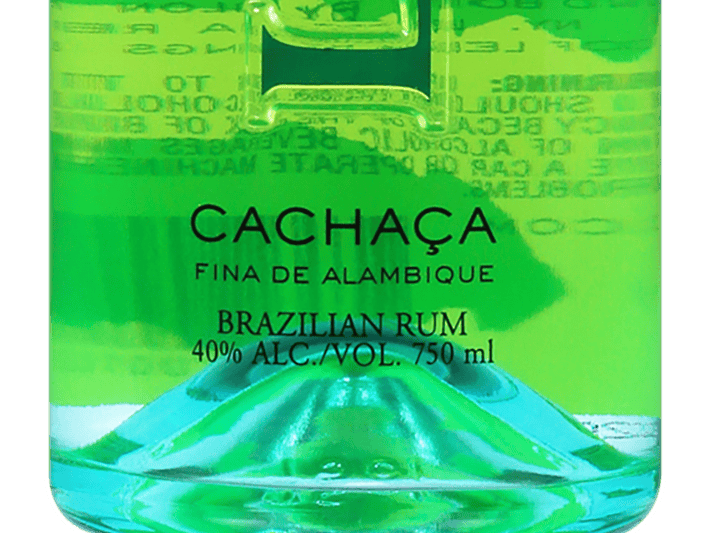
As the story usually goes, rum was born sometime around 1650 in the English colony of Barbados. Problem is, the Portuguese were already distilling sugarcane spirit in Brazil decades earlier. Documentary evidence points to the early 1600s, which predates all evidence of rum in Barbados.1 The original cane spirit of the Americas is actually cachaça, not rum.
For most of the 20th century, cachaça was exported to the United States under the label of “Brazilian rum”. Today, that label has been scrubbed from bottles. The official Brazilian position, backed by decades of lobbying and legal legwork, is that cachaça is not rum; it is its own thing in a separate category. Cachaça must be known as a unique spirit that happens to be made from sugarcane, but is absolutely, categorically, not rum.
How did we get here, and are they right?
Before we dismantle the myths, we need to understand what rum is. The West Indies Rum and Spirits Producers’ Association (WIRSPA) is the trade body representing much of the English-speaking Caribbean’s rum producers, and probably the group with the greatest authority to tell us what the word “rum” means. According to them, the rule is crystal clear: “If the product is fermented from sugar cane juice, syrup or molasses and distilled below 96% alcohol it is rum, pure and simple”.2 That’s it. Around that foundation, nearly every other production choice is allowed to vary: the type of still, unaged or aged, the type of tree the cask is made from, how much sugar is added, if any, or how many times it passed through the still. With that definition in mind, let’s work through the case, myth by myth.
Myth: Cachaça Has a Fundamentally Different Production Process
The Claim: Rum is made from molasses (except rhum agricole), while cachaça is made from cane juice.34
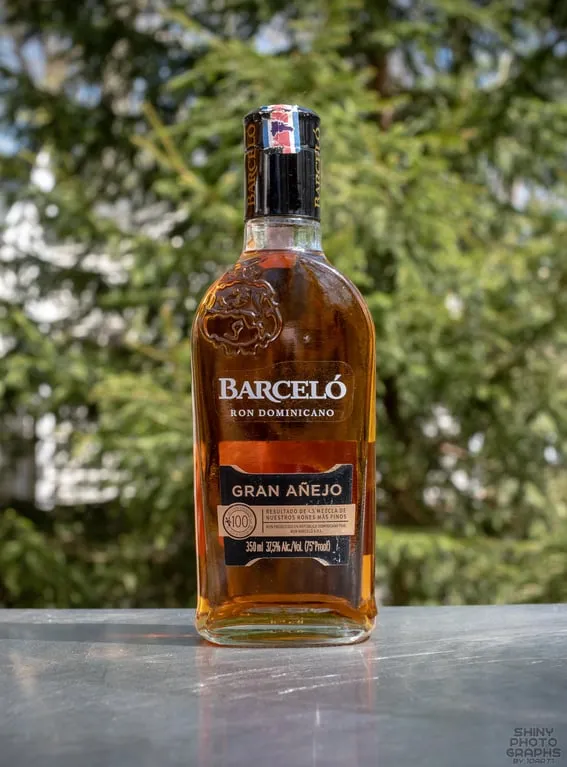
Since the opening of Alcoholes Finos Dominicanos, Ron Barceló has been made with sugarcane juice, despite still tasting like a classic Dominican rum.
Yes, a vast amount of rum is made from molasses. Jamaican, Demerara, Barbadian, and Puerto Rican rums, along with the world’s biggest sellers (Bacardí, Captain Morgan, Tanduay, Havana Club), are overwhelmingly molasses-based. However, the rum category is far more diverse. The Dominican Republic’s Ron Barceló bases its own distillation on fresh cane juice, yet it still tastes like a classic Cuban-style ron. Many of Mexico’s new distillers are crafting cane juice rums. Even Jamaica’s Worthy Park released a cane juice rum to great success. Guatemala’s Ron Zacapa and Ron Botrán are distilled from sugarcane syrup, not juice or molasses. Some Haitian clairins use cane juice, while others are distilled from cane syrup.
If base material were enough to split the category, two very typical Dominican rums, molasses-based Brugal and juice-based Barceló, would have to sit on separate shelves. Clairin Sajous would be separated from Clairin Le Rocher, and the liquor store would need new shelves for whatever marketing story Dictador is telling this year. Cachaça’s base material may be less common, but it is absolutely a variable within the rum family.
The Claim: Due to its raw sugarcane juice base, cachaça is more grassy and tastes more like tequila, while rum is heavy and sweet.345
This claim only works if your entire reference point for rum is Captain Morgan. Is rhum agricole not rum? Is clairin not rum? Are the cane juice rums of Oaxaca not rums? Are they all heavy and sweet?
It makes more sense to contextualize cachaça against the rums of its actual geographic neighbors. Panama, Costa Rica, Colombia, Venezuela, and Guyana, which tend toward a heavier, sweeter molasses style. In this regional context, cachaça does stand out. But standing out from a regional style does not remove a spirit from its overarching category.
The Claim: Cachaça’s single-pass, low proof distillation and low sugar content makes it more rustic.4
It is true that in Spanish-style rum production, spirits are often distilled to near-neutral alcohol, diluted, aged, and sometimes sweetened heavily. But there is nothing about this that is inherent to all rum production. Haitian clairins are commonly distilled just once in traditional pot or small creole column stills, then bottled immediately at still strength with no added sugar. Cachaça resembles clairin or agricole more closely than many Spanish-style rums, but that doesn’t make it outside of the category.
Furthermore, let’s address added sugar. Cachaça is often marketed as a more natural spirit than rum, yet Brazilian law actually permits up to 6g/L of added sugar.6 This is more than Jamaican rum, whose GI does not allow for any added sugar. However, many Central and South American rums operate in less scrupulous ways, where “premium” rums have lots of sugar and other additives to hide imperfections, becoming essentially adult Hawaiian Punch with big numbers on the front that don’t actually represent an age statement. In comparison to that, cachaça’s 6g/L ceiling is pretty modest. The point isn’t that cachaça is more or less pure than rum, but rather that it sits comfortably within rum’s existing spectrum of sweetness.
The Claim: Rum is aged in ex-bourbon barrels, while cachaça is aged in casks built from native Brazilian trees, such as amburana, which give it a unique flavor.34
Ex-bourbon barrels are common because they are cheap and abundant, but this is not a requirement for rum. Many Spanish-speaking countries, such as Guatemala and the Dominican Republic, make use of Spanish sherry casks for aging, and French-owned brands, such as Planteray and Nicoya, also finish their rums in cognac casks. Japanese whisky producers use mizunara oak. If we created a new spirit category every time someone used a different tree, the back bar would need its own zip code.
And critically, aging in native woods is not a strict requirement of cachaça. Cachaça can be consumed unaged (branca/prata), and several major brands, such as Ypióca and Novo Fogo, have begun aging their cachaça in ex-Bourbon barrels. This is driven by a mix of economic realities and growing concerns over the deforestation of Brazil’s endangered forests.7
The Claim: Rum must be aged, while cachaça can be either aged or unaged.5

It’s so sad that the internet is constantly providing false information about my area of expertise. Fortunately, it’s very useful and always right about topics I know very little about!
If some of these claims sound silly, that’s because they are; especially this one. It erases spirits of great cultural importance, such as rhum agricole blanc, Wray & Nephew white overproof rum, Haitian clairins, and others.
This one comes from Serious Eats, which I found on the first page of Google if you search “rum vs cachaca”. In fact, all 3 sources I used for all of these claims come directly from the first page of Google. If you are going to publish an authoritative, definitive guide on a major platform, and you can’t even be bothered to spend five minutes verifying the most basic, easily searchable fact about one of the world’s most popular spirits, why should I trust your pizza dough recipe?
Also, fun fact: aged cachaça (cachaça envelhecida), by law, doesn’t actually have to be fully aged. You can blend aged and unaged cachaça, and as long as at least 50% of it is aged for at least 1 year, it can still legally be called aged cachaça.6
Myth: Cachaça Is Defined as a Separate Spirit
The Claim: Rum can be made anywhere in the world, but cachaça can only be made in Brazil.3
This is a variation of the pervasive “rum has no rules” myth. On its face, the claim is true: cachaça can only be made in Brazil. However, geographic protection is normal. Martinique’s Rhum Agricole AOC is strictly geographically bound to Martinique, yet no one argues that it is not a rum. We would not say that rhum agricole, Jamaican rum, and Guatemalan rum are not rums simply because rum can theoretically be made anywhere, while those specific styles can only be made in their respective countries. Geographic protection dictates where and how a spirit is made, but it does not change what the spirit is.
The Claim: Brazilian law officially defines cachaça as a spirit separate from rum.4
Let’s start with the United States, the largest importer of cachaça by dollar amount.8 Brazil used to have to declare it as “Brazilian rum” on US labels. However, after some diplomatic horse-trading in which Brazil agreed to recognize Bourbon and Tennessee Whiskey as protected products in the Brazilian market, the Alcohol and Tobacco Tax and Trade Bureau (TTB) ruled that cachaça is a type of rum that is a distinctive product of Brazil, allowing it to be labeled simply as “cachaça”, with the “rum” qualifier now optional.9 But cachaça is still unequivocally defined as rum, and cachaça imported into the US must still meet the base production requirements of rum: fermented from sugarcane products, distilled below 96% ABV, and bottled at no less than 40% ABV (while in Brazil the minimum is 38%).
The European Union tells the same story. It defines rum as a spirit that is fermented from sugarcane products, distilled below 96% ABV, and bottled at no less than 37.5% ABV, and may not be flavored, nor sweetened above 20g/L.10 Cachaça does not appear as its own separate category anywhere in Annex I, and it falls under the general rum definition. So, if you live in the US or the EU, legally, cachaça is rum.
But many countries have quirks in their laws. We all know the saying: “It’s not called Champagne unless it comes from the Champagne region of France, otherwise it’s just a sparkling wine”. But actually, the U.S. has a grandfather clause that allows some American producers to label their sparkling wine “Champagne”, much to the chagrin of the French. In 2021, Russia amended its alcohol law so that only Russian-made sparkling wine could carry the unqualified Russian word for “Champagne” (Shampanskoye), forcing French Champagne houses to label their product as “sparkling wine” for the Russian market.
It should be noted that Brazil maintains two legal categories for sugarcane spirits: aguardente de cana, a less-regulated tier of sugarcane spirits, and cachaça, a subset of aguardente de cana that is a tightly controlled premium product. When Brazil campaigns for international recognition of cachaça as something other than rum, it isn’t asking for the same distinction to be made for aguardente de cana. The broader, cheaper, less regulated parent category can continue sitting beside Captain Morgan, and Brazil doesn’t object. The lobbying only begins when the designation threatens the price point.
The Claim: The caipirinha is the national cocktail of Brazil, and it can only be made with cachaça, not rum.3
Some argue that a caipirinha is just a daiquiri.11 Let’s acknowledge one thing: the caipirinha is not a daiquiri. The muddling of fresh lime wedges with granulated sugar extracts different oils and creates a completely different texture than a shaken cocktail of lime juice and simple syrup. The caipirinha is a uniquely Brazilian invention, and it deserves its own name.
A Cuba Libre is a uniquely Cuban invention, and we would not reduce it to merely a “rum and Coke”. But we also don’t decide that Cuban rum is therefore a separate category of spirit. A Manhattan is not an Old Fashioned. We respect these distinctions because they matter to the people who drink them. The caipirinha is Brazil’s mixed drink, but the fact that it has a national identity doesn’t mean the liquid in the bottle stopped being rum.
Myth: Cachaça Came First, So It Can’t Be Rum
The Claim: Cachaça predates rum. Therefore, it is not a type of rum.45

While the exact genealogy of early cane spirits is messy, the evidence that we have of distilling cane in Brazil predates that of Caribbean rum. In at least one case, we know that the Dutch were distilling cane spirits in Pernambuco before the Portuguese expelled them in 1654. Many of those settlers took their pot stills and their expertise to Barbados, where they put them to work on the island’s sugarcane plantations.12 In general, though, the broader picture is a complex and interconnected one, where tafia, guildive, aguardiente, and aguardente de cana all developed in parallel across colonial towns, as workers distilled whatever sugarcane product was at hand, and influenced each other through trade and migration. The idea that someone in Barbados looked at decades of Brazilian distilling and thought, “You know what? I’ll invent something completely different!” is absurd.
Cachaça came first, and rum soon followed, but the origins are anything but separate. If anything, the logical conclusion isn’t that cachaça is a separate category from rum, but that rum is actually a type of cachaça. Brazil, understandably, does not make this argument. It won’t earn them their own shelf at Total Wine.
Why Brazil Is Fighting This Battle
Brazil has fought long and hard to divorce cachaça from the rum category, but the production myths don’t hold, and the legal distinction is a political game. But it’s a smart game with undeniable benefits. When Brazil lobbies the international community to recognize cachaça as a unique category, they are protecting their premium tier. Rum carries baggage: coconut flavoring, pirates and parrots on labels, $12 handles that you chugged in college and regretted the following morning. Brazil wants to ensure that the world recognizes the craftsmanship and heritage that elevates cachaça above that.
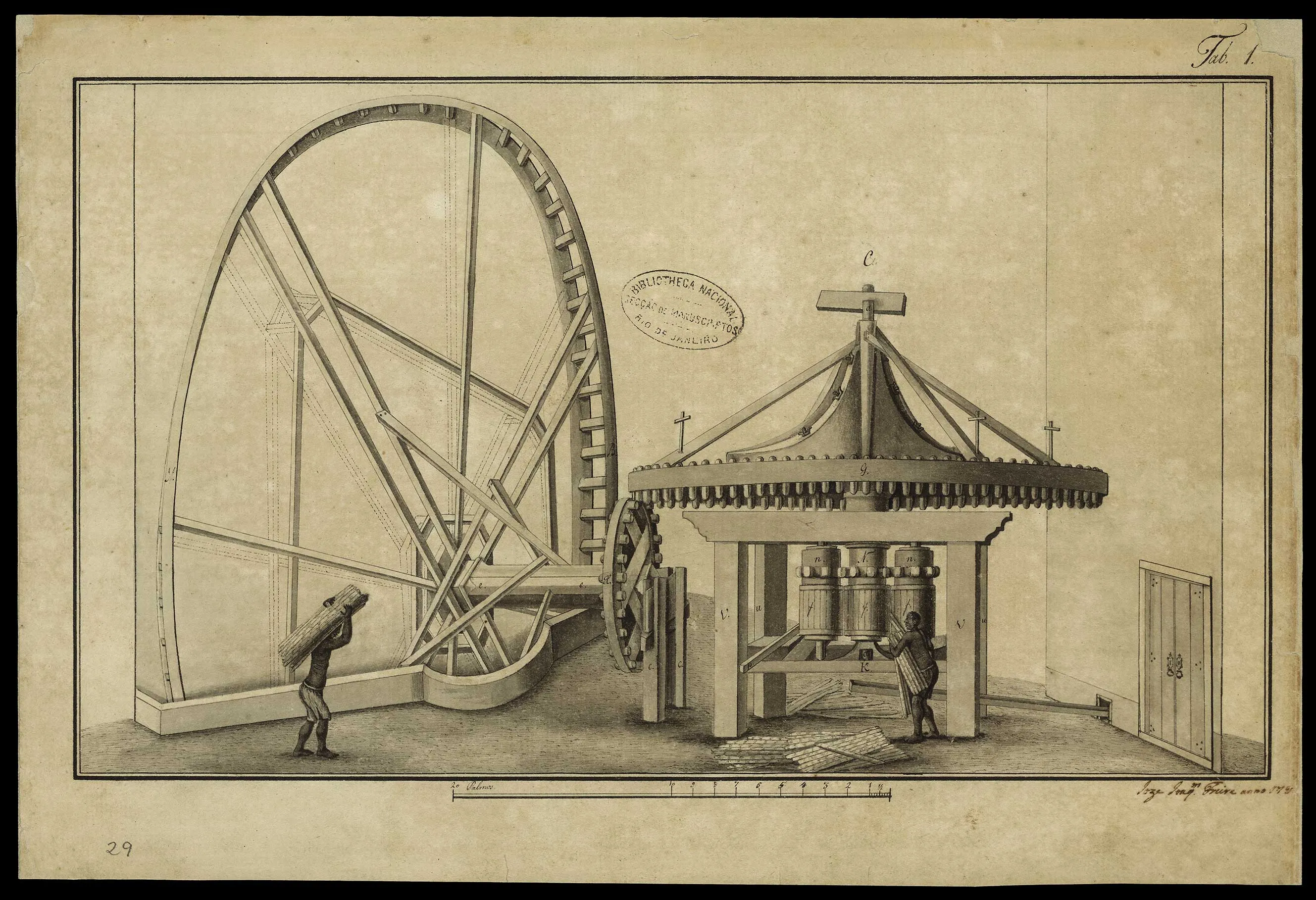
Sugarcane crushing in a vertical-roller mill driven by a waterwheel. José Joaquim Freire, 1784.
Biblioteca Nacional, Rio de Janeiro.
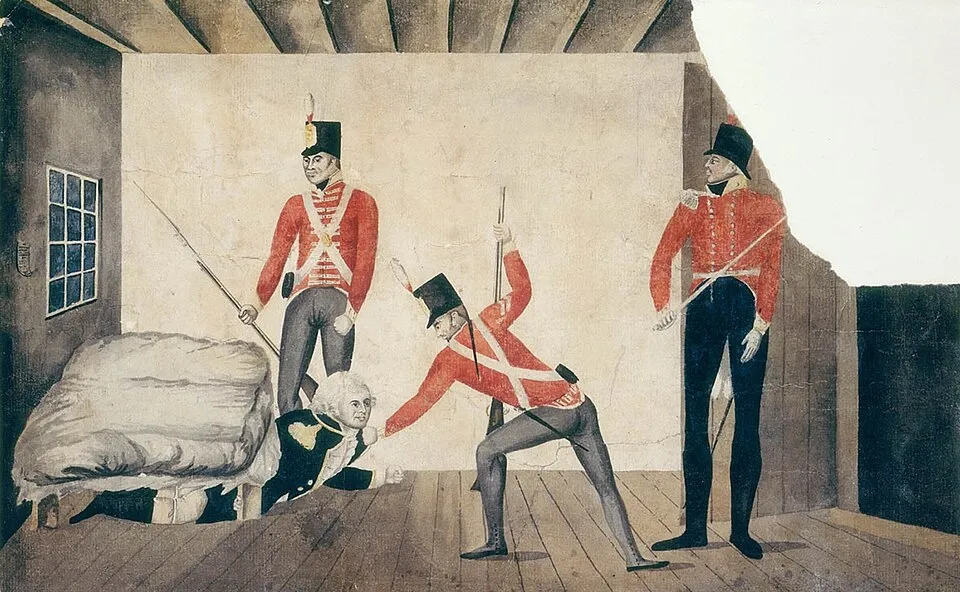
The arrest of Governor Bligh during the Rum Rebellion, NSW Australia, 1808.
But it’s also more than just marketing. Cachaça was historically the drink of communities of enslaved Africans and runaways, the spirit of the senzala and the quilombo. Portuguese colonizers and the Brazilian elite often denigrated it as rough swill for peasants and slaves, instead importing Portuguese wine and brandy for themselves. When the Portuguese crown banned cachaça multiple times in the 17th and 18th centuries to protect its own wine and brandy exports, drinking cachaça became an act of defiance. In the Revolta da Cachaça, Brazilians overthrew the governor, held Rio de Janeiro for five months, and won back the spirit, further cementing cachaça’s place as the spirit of Brazil’s people.13
However, this sort of story is a shared history of the Americas. Spain’s ban of aguardiente sparked rebellions across South America and started the First Rum War in Cuba (yes, there was more than one). The American Revolution was fueled in part by anger over the restrictions placed on Barbadian rum, which was later served by the barrel at Washington’s inauguration. The entire history of cane spirits in the Americas is one of colonial extraction, enslaved labor, and working-class rebellion. By artificially segregating cachaça, Brazil might think it is protecting Brazilian heritage, but at the same time, it is isolating the very “father of all rums” from its own family tree.
Cachaça should have nothing to fear from the word “rum”. If Brazil helped invent the family, why should it be insulted by being recognized as part of it? Cachaça producers and exporters benefit immensely from rum’s massive global distribution networks, its cocktail culture, its bartender community, its competitions, yet they bristle when a bartender groups them together, or when a liquor store places them on the same shelf. At the end of the day, the definition of rum is broad enough, under US law, EU law, and WIRSPA, to cover many diverse styles, from grassy, salty agricoles to fruity Jamaican funk bombs; from rich, sweet Central American soleras to light, dry Cuban rones.
So it’s time to call cachaça what it is: great, historic, Brazilian rum. Recognizing cachaça as rum does not erase its identity, but rather, acknowledges that Brazil helped shape the history of the New World’s great spirit. So if calling cachaça “rum” feels like a demotion, then perhaps we’ve simply undervalued rum.
Footnotes
-
Cachaça vs Rum – What Sets Them Apart? – Texas de Brazil ↩ ↩2 ↩3 ↩4 ↩5
-
What Are the Differences Between Rum and Cachaça? – Vinatis ↩ ↩2 ↩3 ↩4 ↩5 ↩6
-
Classification and labelling terminology for cachaça – NIH.gov ↩ ↩2
-
One Brazilian Booze Brand Is Leading The Fight For An Un-Endangered Forest - Forbes ↩
-
‘Cachaça is far more than the Caipirinha!’ – Beverage Daily ↩
-
Going Brazilian – Cachaca Regulations Demystified – Cocktail Wonk ↩