
Destilería Artesanal Taboga
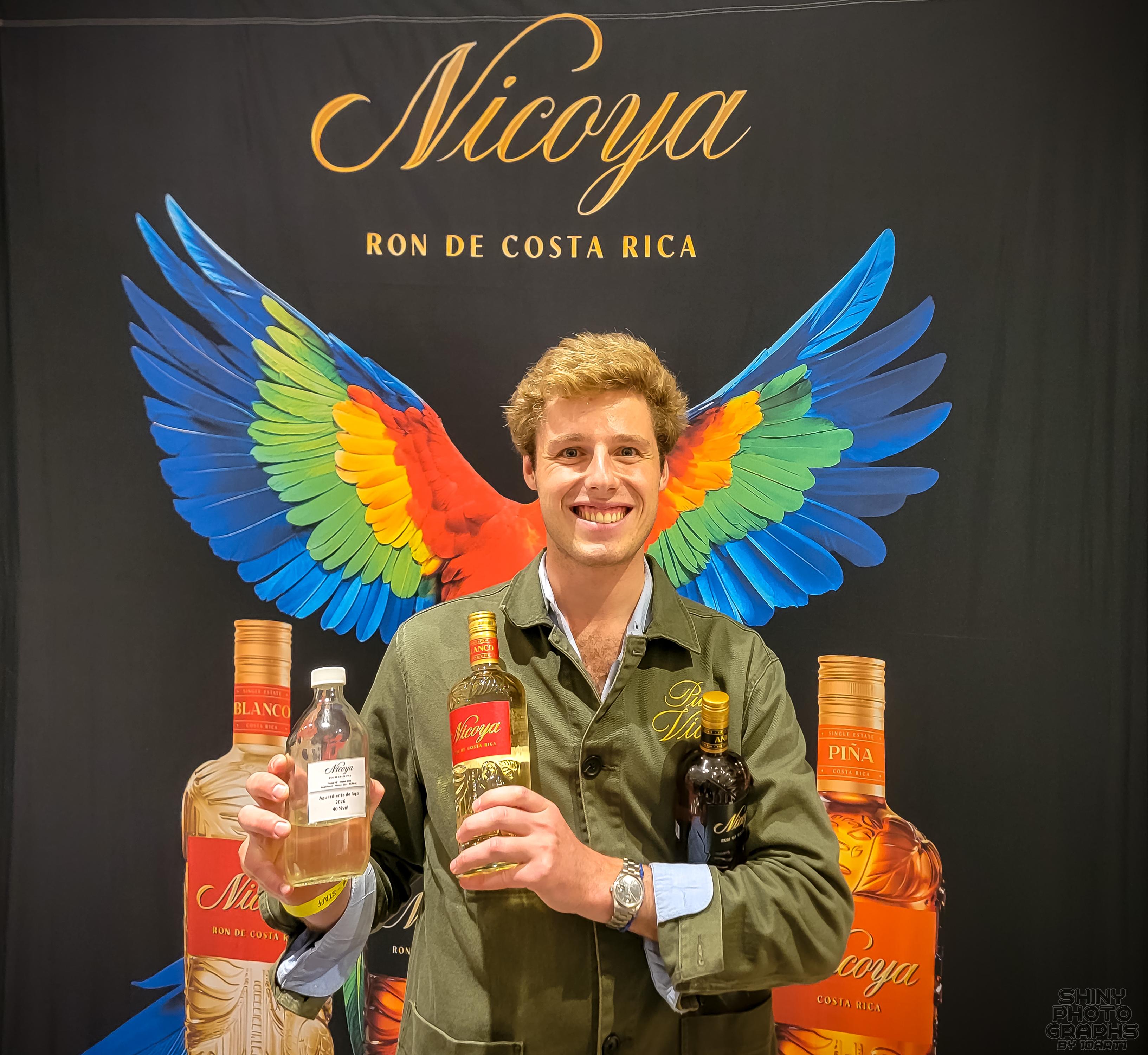
This past weekend I attended the NY Rum Fest for the first time, and it was a fantastic experience. Imagine a conference room lined with about 30 tables, each representing a different company, and some offering upwards of 20 different bottles for tasting. Obviously, I could not try everything; even pacing myself and only taking small sips, I feel like I made it through less than a third of the bottles on offer. I will definitely be coming back next year.
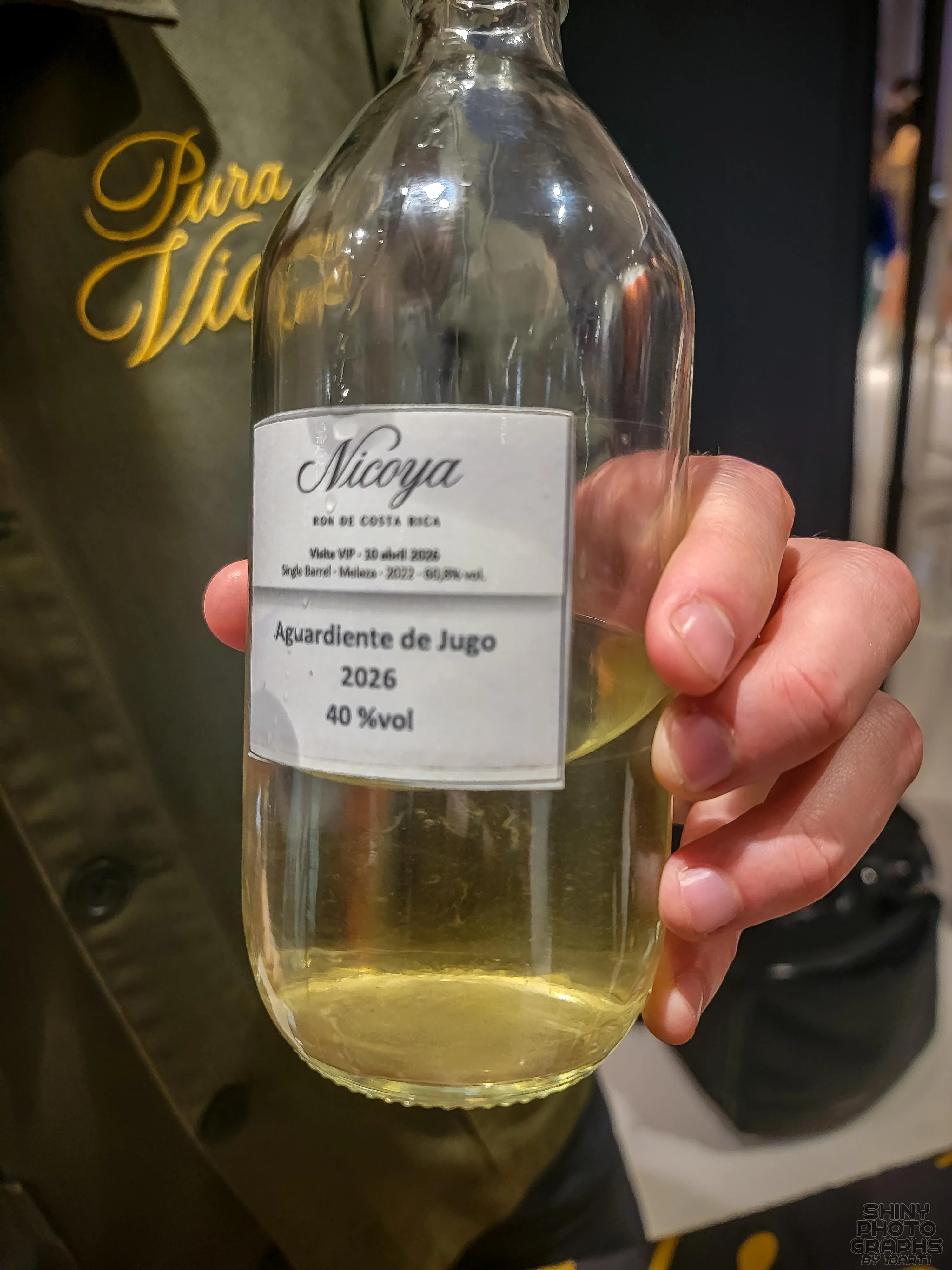
Cane juice aguardiente
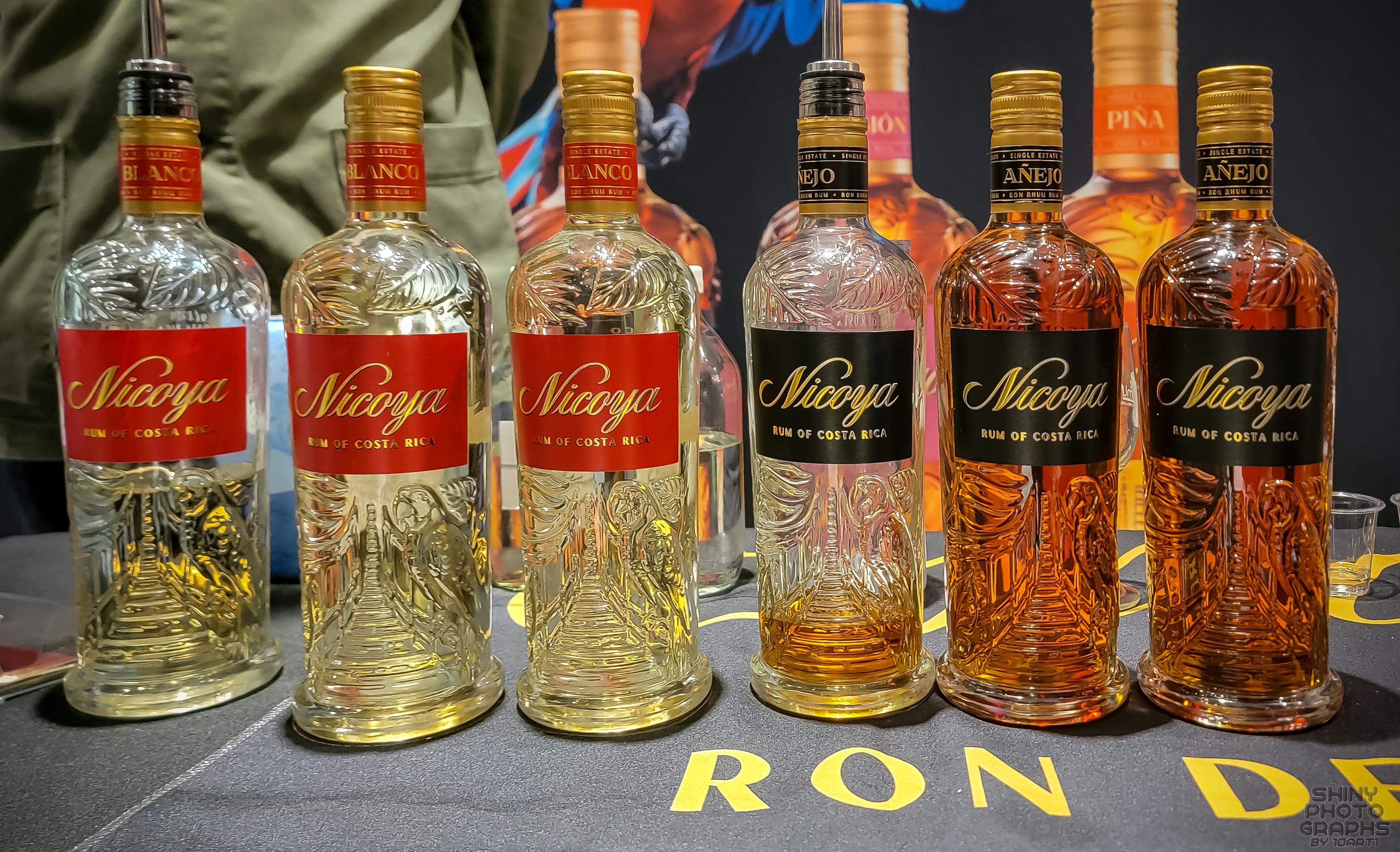
I took plenty of notes, but I wanted to start by spotlighting one company in particular: Nicoya. Their table stood out because Pierre Bardinet pulled a Hampden Estate and actually brought Nicoya’s individual unaged marques for us to taste.
Nicoya currently produces three marques: aguardientes of cane juice, cane syrup (aka cane honey), and molasses. Instead of using the much more common continuous multi-column setup, each ferment is batch-distilled in copper pot stills and then re-distilled in a copper column. These components are ultimately blended to create both their Blanco and Añejo expressions. Pierre let me try all three marques.
Cane juice: Immediately reminiscent of Haitian cane spirits like Clairin Sajous. Vegetal, peppery, fruity, and sharp.
Cane syrup: This one was more complex. There was still some vegetal notes, but now it was more deep, robust, and smoky, like Clairin Le Rocher, or Caña Criolla from The Rums of Mexico, with an aftertaste of buttered popcorn.
Cane molasses: Interestingly, on the nose and initial palate, this one was the most subdued. Just typical notes of column still rum, but it had a deep umami note to it that I couldn’t quite put my finger on.
After trying each individually, I asked to have all three mixed together. The result was like an orchestra, where the cane juice was the top note, cane syrup was the melody, and molasses was the bass. Then I asked for more molasses because you always need more bass. It was actually incredible, and had it not been near the end of rum fest with a few more tables to visit, I would have stayed and played around with the blending some more. It was so fun! What other producer lets you taste cane juice, cane syrup, and molasses rums all produced from the same place in the exact same way, side-by-side?
History
Taboga is a new, small-scale distillery in Costa Rica, but its roots stretch much further back.
Taboga Sugar Factory
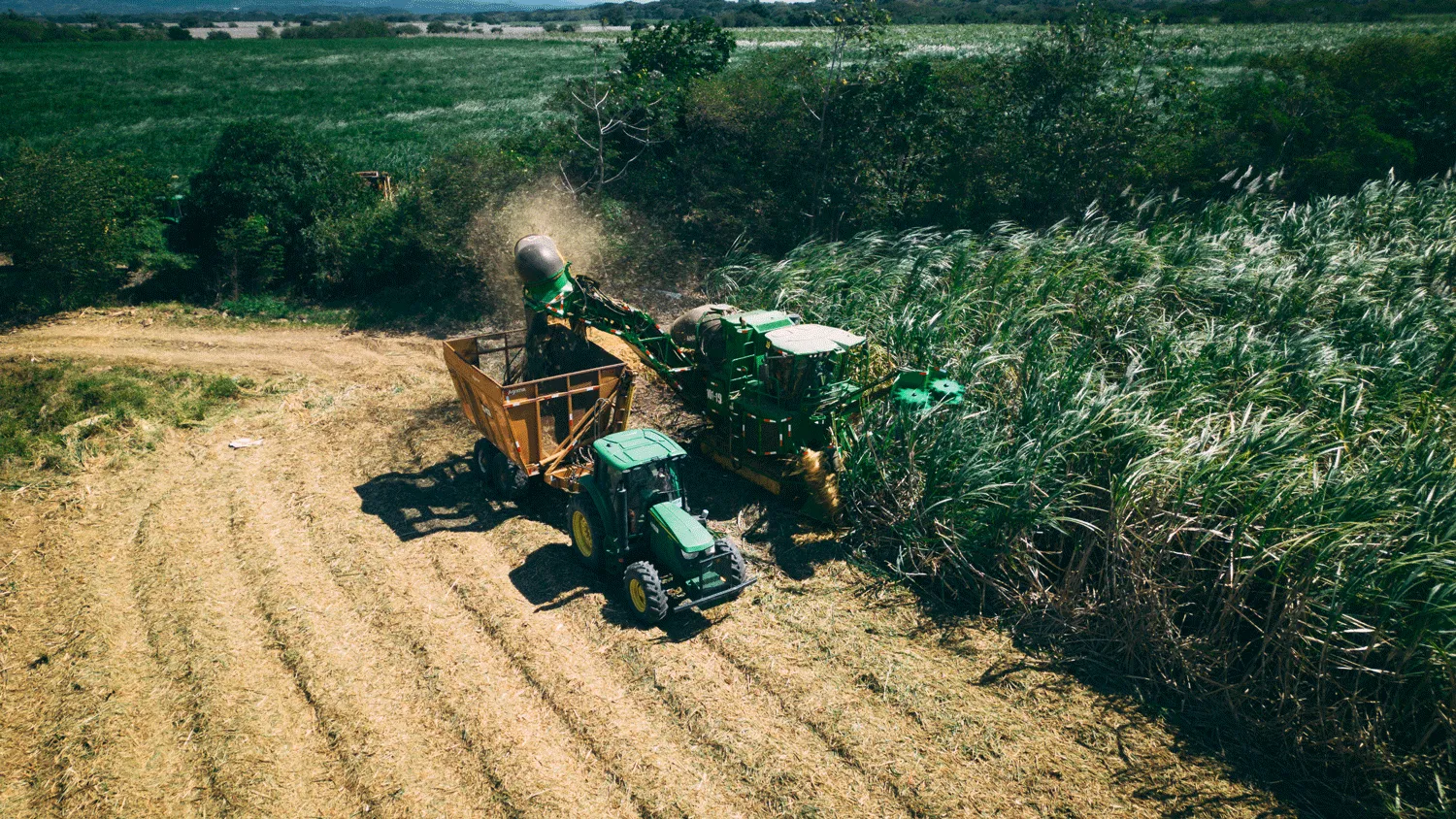
Harvesting sugarcane at Taboga.
The Sanchez estate was established in 1916, and the Taboga Sugar Factory followed in 1958. It is an institution in Costa Rica, responsible for 20% of the country’s sugar production. They also have operated an industrial alcohol distillery and have been exporting alcohol to Europe since 1997. In 2019, Taboga expanded its operations by opening Destilería Artesanal Taboga to produce artisanal rum.
It’s important to note that in Costa Rica, the state holds a monopoly on alcohol production. Fábrica Nacional de Licores (FANAL) has historically held the exclusive right to produce and distribute alcohol domestically, and they are likely to be the source of the distillate for Ron Centenario, the dominant rum brand from Costa Rica.
Les Bienheureux
Alexandre Sirech previously worked for Pernod Ricard, helping to revitalize the Cuban rum export business with Havana Club, before transitioning into the wine industry with his wife. In 2013, he partnered with Jean-François Moueix to found Les Bienheureux. They immediately dove into rum, releasing a cachaça and a cocoa rum in 2014, followed by Embargo in early 2015, and El Pasador de Oro in late 2015 (which I have previously reviewed).
Crucially, none of these early rums were distilled in-house. They were sourced, blended, and finished in France. A similar approach was taken with their French whiskey brand, Bellevoye, which became a top-seller in France after being finished in cognac casks. From both a production and consumer preference standpoint, the French clearly possess a deep affinity for cognac cask finishing.
Nicoya
Pierre Bardinet joined Les Bienheureux in 2020. During a 2021 trip to Costa Rica, he decided that Taboga would be the ideal location for Les Bienheureux to begin distilling rum. Their guiding philosophy was to build a true single-estate distillery, a narrative that you will see throughout Nicoya’s marketing and literature. They boldly claim, “Costa Rica deserved a great rum, and so we created Costa Rica’s first rum distillery!”, a direct jab at Ron Centenario. However, as you’ll see, their claims of breaking the state monopoly and creating a single-estate distillery… have some nuances.
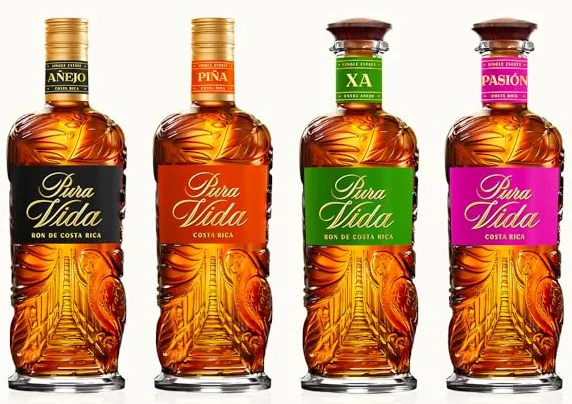
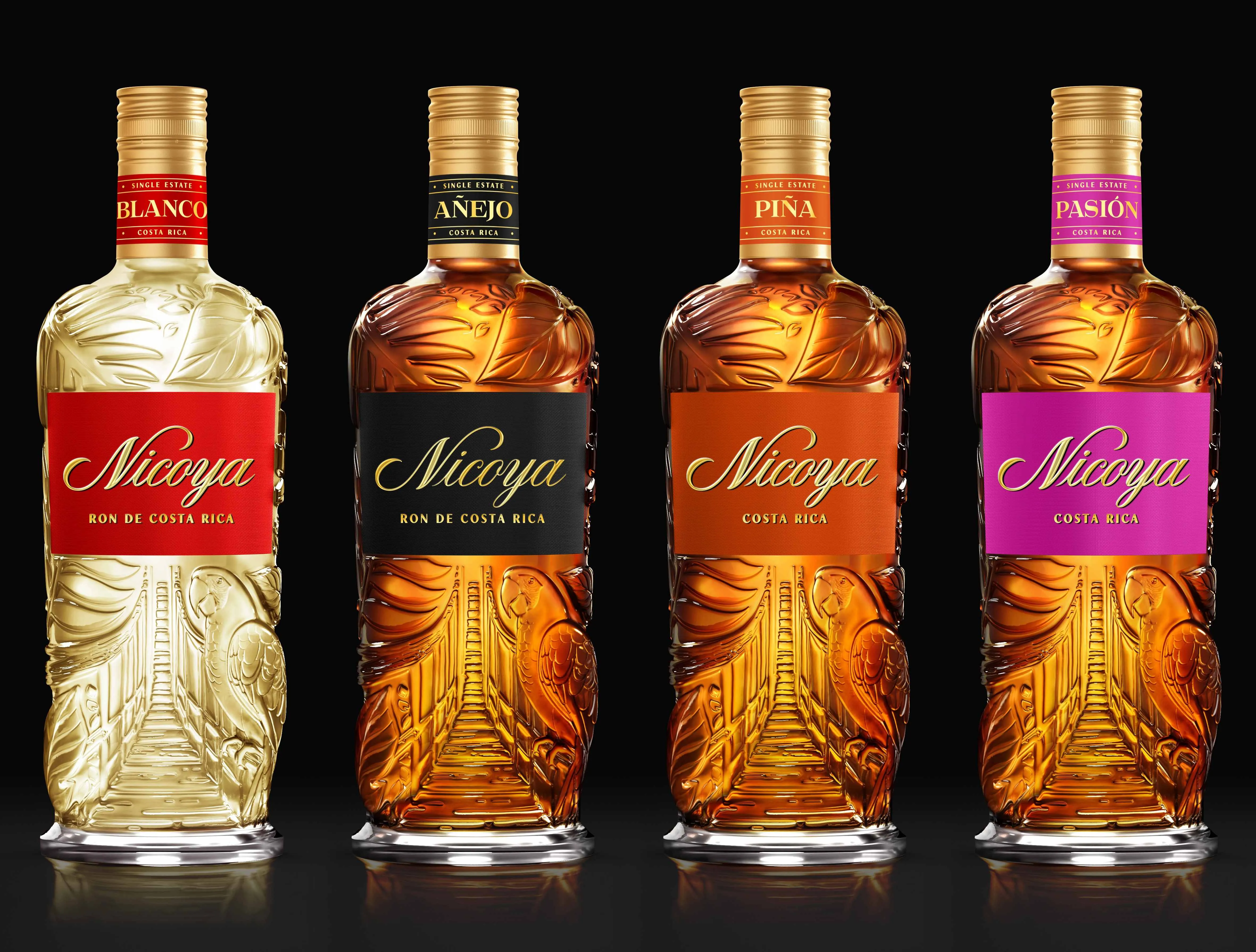
The Pura Vida and Nicoya bottles.
Products
The Taboga distillery produces Ron 1916 and industrial alcohol as house brands, while producing Pura Vida and Nicoya specifically for Les Bienheureux. I don’t know if Pura Vida remains a separate brand or if it underwent a direct rebranding into Nicoya in 2024, though I suspect the latter.
Production
Fermentation
The distillery ferments its three marques (cane juice, cane syrup, and molasses) separately. Fermentation is strictly temperature-controlled between 28-32°C, and they use a commercial yeast strain from Lallemand.
Distillation
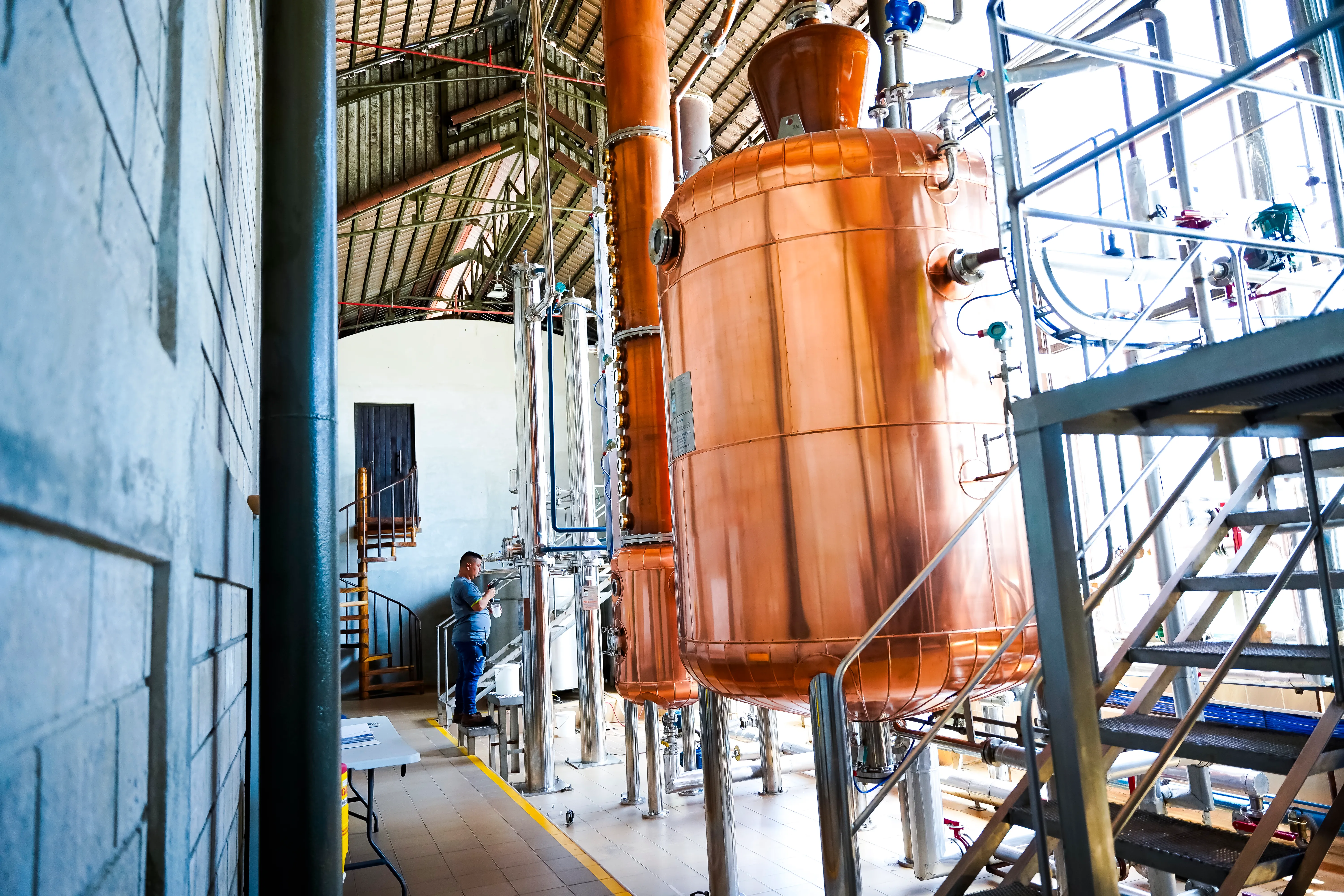
Stills at the Taboga distillery.
The three components are batch-distilled separately in 5,000L copper pot stills, then re-distilled through a 14-plate copper column still. The cane juice is distilled to a final ABV of 82%, while the syrup and molasses are distilled to a final ABV of 88% ABV. Marketing photos reveal at least one column still and two pot stills on site, though there may be more outside the frame.
Aging
Each marque is aged individually, primarily in young ex-bourbon barrels sourced from Green River (Tennessee) and Wild Turkey (Kentucky). Roughly half of their inventory consists of first-fill barrels. These factors impart a heavier oak and vanilla influence. The XA expression, and perhaps others, are also finished in cognac casks in France. Oliver Dumont is the Cellar Master at Nicoya.
Pierre is quick to declare that he feels that age statements are overrated. You might notice a lack of age statements across the Nicoya lineup. Neither the Añejo, XA, XO, etc. This caught my attention, particularly since Les Bienheureux’s other major release, El Pasador de Oro, is a solera-aged product sourced from DARSA (the same distillery behind Zacapa) before being finished in France. I reached out to Pierre for clarification on this philosophy:
Q: None of the Nicoya expressions carry an age statement. Can you explain the reasoning for that decision? Was it a philosophical choice, or are some expressions solera aged and therefore don’t have a true age statement?
A: Rum is a category with no rules in which the consumer is misleaded with false statements. When it comes to ageing, I’m often surprised to see some 15 to 30 ‘years old rums’ produced in some countries with 10% evaporation per year. These competitors use the age of the oldest drop in the blend as the ‘reference’ year. Our rums are young and proud to be young. We have no dogma on the age our añejo can be 6 month, 1 year or 3 years old, we bottle it when we considered that it has an age profile with the oakiness well balanced with the rum. We use no solera.
While I don’t necessarily agree with the blanket statement that rum has “no rules”, I understand the sentiment. In a separate interview with Taste the Dram, Pierre reinforced this perspective, stating: Stop asking ‘how old is it?’ and start asking ‘where does it come from?‘
Single Estate & Terroir
Nicoya heavily emphasizes its single-estate origins, frequently marketing itself as Costa Rica’s only “cane-to-bottle” rum. Terroir is clearly central to Nicoya’s identity. However, this raises an interesting point: all Nicoya expressions are shipped to France for bottling, and some expressions, such as XA (Extra Añejo), are finished in cognac casks in France. I reached out to Pierre about this for comment:
Q: The single-estate terroir is clearly central to Nicoya’s identity. How do you think about the cognac cask finishing in France for the XA in that context?
A: We see the cognac ageing in France as a ‘terroir’ approach because it reveals through the rum the philosophy of the makers who came originally from the wine/cognac world before entering the rum category.
It’s an interesting defense. Given that the founders are French, their expertise is in cognac, they built their success on cognac-finished whiskey, the finishing process is essentially an expression of the makers’ terroir. Though, in my opinion, if the story is how much the land matters, shipping your rum to France for finishing works against that narrative. Similarly, while Nicoya’s total transparency regarding their 12g/L dosage is highly commendable, the addition of sugar presents another deviation from their claims of absolute purity.
The Monopoly
Nicoya’s marketing leans heavily on their role as industry disruptors. I am quoting their promotional material directly:
How could this great nation not have its own rum?
Alcoholic beverages were exclusively controlled by a state monopoly. By demonstrating to the authorities, the quality of the rums we could produce and export, we changed the legislation. NICOYA is therefore the first Costa Rican rum in history!
This claim is pretty extraordinary, and so I did some fact-checking. I could not find what the exact legal changes were, nor that the monopoly changed. It appears that, since the 1990s, the monopoly simply softened, and now it’s more like a concession system in practice. Taboga has possessed a license to distill industrial alcohol for decades, built an artisanal rum distillery 2 years before employees of Les Bienheureux set foot in the country, and claiming to be the “first Costa Rican rum in history” is a massive stretch when Ron Centenario has been the country’s dominant brand for much longer.
Last Thoughts
On a final note, lot of this information has only been possible because Pierre was very responsive and engaged openly with my questions, and he even sent me a full media package and several powerpoints. I’ve reached out to the makers of Zacapa and Dictador and have gotten no response, so I greatly appreciate Pierre’s knowledge and accessibility.
References
I have used the following sources for the information in this article:
- Marketing material provided by Les Bienheureux
- Direct messaging with Pierre Bardinet
- About Us - Taboga
- [Brand Focus ] The success story of Les Bienheureux - Rumporter
- “Taste the Place: Why Nicoya Is Pushing Rum Beyond Age Statements” - Taste the Dram
Reviews from Destilería Artesanal Taboga
#137 Nicoya Añejo
This past weekend I attended the NY Rum Fest for the first time, and it was a fantastic experience. Imagine a conference room lined with about 30 tables, each representing a different company, and some offering upwards of 20 different bottles for tasting. Obviously, I could not try everything; even pacing myself and only taking small sips, I feel like I made it through less than a third of the bottles on offer. I will definitely be coming back next year. Cane juice aguardiente I took plenty of notes, but I wanted to start by spotlighting one company in particular: Nicoya. Their table stood out because Pierre Bardinet pulled a Hampden Estate and actually brought Nicoya's individual unaged marques for us to taste. Nicoya currently produces three marques: aguardientes of cane juice, cane syrup (aka cane honey), and molasses. Instead of using the much more common continuous multi-column setup, each ferment is batch-distilled in copper pot stills and then re-distilled in a copper column. These components are ultimately blended to create both their Blanco and Añejo expressions. Pierre let me try all three marques. I won't rate them since they're not for individual sale, but I wanted to share my feelings about them. Cane juice: Immediately reminiscent of Haitian cane spirits like Clairin Sajous. Vegetal, peppery, fruity, and sharp. Cane syrup: This one was more complex. There was still some vegetal notes, but now it was more deep, robust, and smoky, like Clairin Le Rocher, or Caña Criolla from The Rums of Mexico, with an aftertaste of buttered popcorn. Cane molasses: Interestingly, on the nose and initial palate, this one was the most subdued. Just typical notes of column still rum, but it had a deep umami note to it that I couldn't quite put my finger on. After trying each individually, I asked to have all three mixed together. The result was like an orchestra, where the cane juice was the top note, cane syrup was the melody, and molasses was the bass. Then I asked for more molasses because you always need more bass. It was actually incredible, and had it not been near the end of rum fest with a few more tables to visit, I would have stayed and played around with the blending some more. It was so fun! What other producer lets you taste cane juice, cane syrup, and molasses rums all produced from the same place in the exact same way, side-by-side? Review For context, this is happening at a rum fest and rum is being poured and carried around all around me, so subtle aromatic notes can easily be lost. Smell Way lighter than the aguardiente blend that I just nosed. Compared to that, it doesn't really have much going on. Taste I did swirl water around in my mouth between trying the three marks and these samples, but still, it's not exactly a fresh start. Even so, this rum definitely came off as noticably more dialed back compared to the marks. It's pretty light, and it has notes of oak, vanilla, caramel, and molasses, and less grassy brightness that you get in the Blanco. It leans more like a typical "Spanish-style" gold rum, and it's also noticably sweet, but not terribly so. Verdict {rating}/10 This review partly exists because I wanted to share my experience at Nicoya's table, and also there are basically no reviews for this rum. I think that neither bottling is fantastic, but at $20, they are competitive with Appleton Signature for value, which I consider to be a benchmark of budget rum. I gave Appleton Signature a 6.5/10, which is what I gave the Blanco version, but the Añejo was a bit more subdued. Still pretty good for an aged $20 rum.
#136 Nicoya Blanco
This past weekend I attended the NY Rum Fest for the first time, and it was a fantastic experience. Imagine a conference room lined with about 30 tables, each representing a different company, and some offering upwards of 20 different bottles for tasting. Obviously, I could not try everything; even pacing myself and only taking small sips, I feel like I made it through less than a third of the bottles on offer. I will definitely be coming back next year. Cane juice aguardiente I took plenty of notes, but I wanted to start by spotlighting one company in particular: Nicoya. Their table stood out because Pierre Bardinet pulled a Hampden Estate and actually brought Nicoya's individual unaged marques for us to taste. Nicoya currently produces three marques: aguardientes of cane juice, cane syrup (aka cane honey), and molasses. Instead of using the much more common continuous multi-column setup, each ferment is batch-distilled in copper pot stills and then re-distilled in a copper column. These components are ultimately blended to create both their Blanco and Añejo expressions. Pierre let me try all three marques. I won't rate them since they're not for individual sale, but I wanted to share my feelings about them. Cane juice: Immediately reminiscent of Haitian cane spirits like Clairin Sajous. Vegetal, peppery, fruity, and sharp. Cane syrup: This one was more complex. There was still some vegetal notes, but now it was more deep, robust, and smoky, like Clairin Le Rocher, or Caña Criolla from The Rums of Mexico, with an aftertaste of buttered popcorn. Cane molasses: Interestingly, on the nose and initial palate, this one was the most subdued. Just typical notes of column still rum, but it had a deep umami note to it that I couldn't quite put my finger on. After trying each individually, I asked to have all three mixed together. The result was like an orchestra, where the cane juice was the top note, cane syrup was the melody, and molasses was the bass. Then I asked for more molasses because you always need more bass. It was actually incredible, and had it not been near the end of rum fest with a few more tables to visit, I would have stayed and played around with the blending some more. It was so fun! What other producer lets you taste cane juice, cane syrup, and molasses rums all produced from the same place in the exact same way, side-by-side? Review For context, this is happening at a rum fest and rum is being poured and carried around all around me, so subtle aromatic notes can easily be lost. Smell Way lighter than the aguardiente blend that I just nosed. Compared to that, it doesn't really have much going on. Taste I did swirl water around in my mouth between trying the three marks and these samples, but still, it's not exactly a fresh start. Even so, this rum definitely came off as noticably more dialed back compared to the marks. It was not completely bland, but more along the lines of Hamilton Breezeway Blend, which is the closest rum in taste, in my opinion. It seems like Nicoya Blanco might make a great daiquiri candidate, but unfortunately, I had no means of trying that at the time. Verdict {rating}/10 This review partly exists because I wanted to share my experience at Nicoya's table, and also there are basically no reviews for this rum. I think that neither bottling is fantastic, but at $20, they are competitive with Appleton Signature for value, which I consider to be a benchmark of budget rum. I gave Appleton Signature a 6.5/10 as well, and I am happy to sip it, so I may have to keep an eye out for Nicoya.