
Destilería Colombiana Established in 1913 Ltda. (Dictador Part 2)
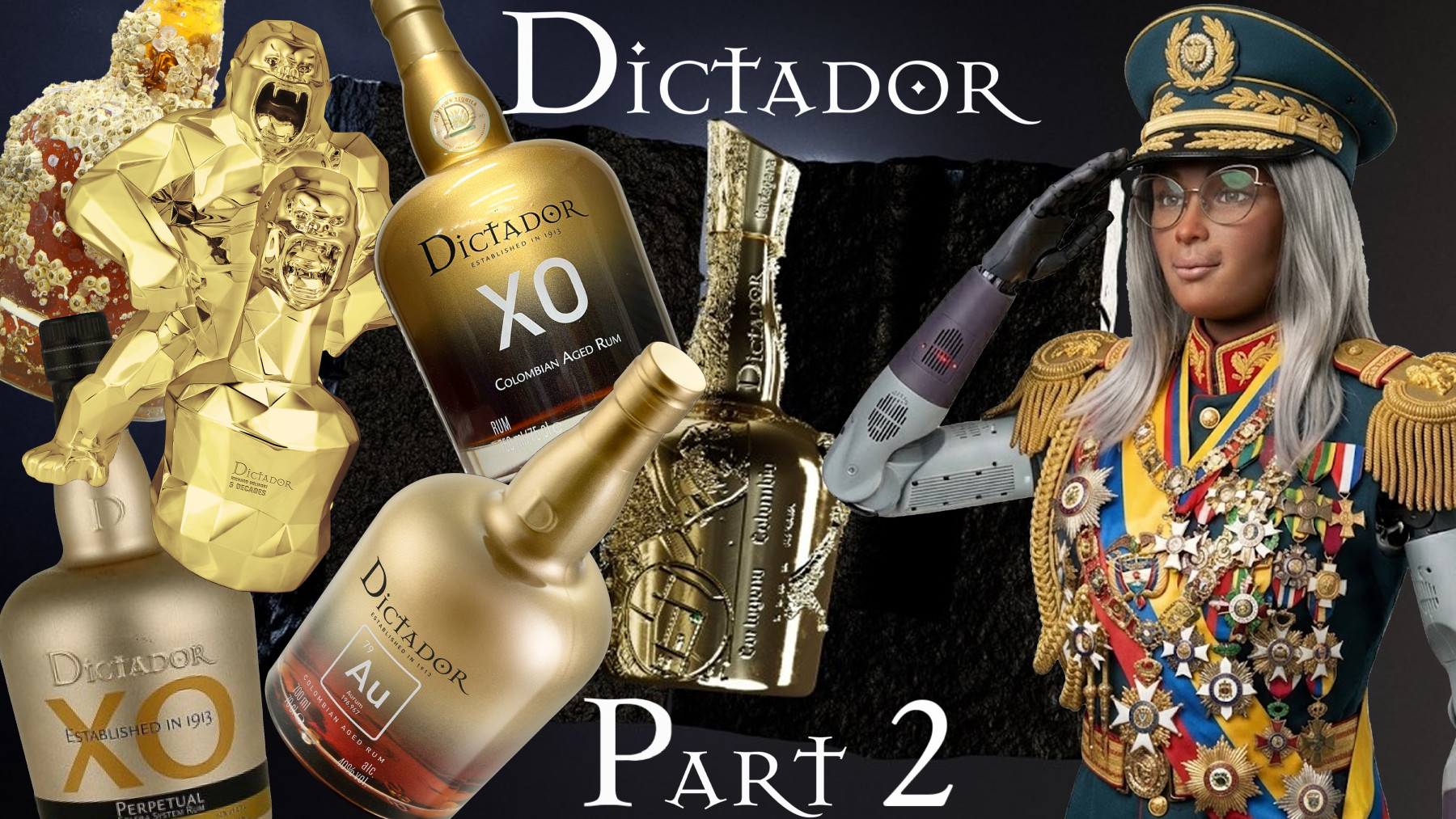
In Part 1 of this investigation, we uncovered that Dictador’s century-old family distillery narrative cannot be corroborated, and its corporate structure resembles a shell game more than a small family business. But accounting acrobatics are one thing; what actually ends up in the bottle is another. Let’s talk about the liquid.
What’s Actually in the Bottle?
Dictador’s marketing materials proudly declare that their rum is made exclusively from cane honey:
For Dictador rums, we are among the few producers who exclusively use sugar cane syrup, which results from boiling — or in other words, reducing — the juice.1
Yet, in an interview, Hernán Parra contradicts this, admitting the light rum forming the majority of their blend is actually made from a blend of molasses and cane syrup, not pure cane syrup.2 On the Ron Baluarte website, it simply asserts that molasses is another name for cane syrup.3 In an interview with Cyril from DuRhum, Parra stated that the wort is fermented up to 13-14% ABV, which Cyril says is far above what the wort for rum is typically fermented to.4 On the Ron Baluarte website, it goes even further and says that it is fermented all the way to 18% ABV.3
Parra asserts that most Dictador expressions are blends of pot and column still rums (excluding single cask releases and certain other expressions, such as my bottle of Dictador XO Insolent). He specifies that the column still produces light rum at 96% ABV, while the pot still portion, which he refers to as “rhum agricole”, is distilled to 60% ABV.2
For those who might not know, Martinique AOC rhum agricole is a French protected designation of origin for cane juice rums that, ironically, requires column still distillation.
Parra claims this pot still portion is so flavorful that it boasts congener concentrations of 3,000–4,000 ppm per liter!2 Anyone familiar with rum production knows that congeners are measured in g/hLAA (grams per hectoliter of pure alcohol). This makes sense: it is a standard unit of mass per volume. What Parra describes instead is thousands of… parts per million… per liter. Even charitably interpreting “ppm per liter” as simply “ppm”, this is not how rum congeners are reported, and it is impossible to know what he actually means. I wouldn’t dwell on this, except that congeners are one of the most critical measurements rum enthusiasts look for, and this foreshadows a pattern of confusing figures throughout their production claims.
According to Parra, the standard pot/column blend consists of 30% pot still and 70% column still rum, resulting in a new-make spirit at 77% ABV that is immediately barreled.2 Yet, in a different interview, he claims this same blend comes out to 72.5% ABV.4 Never mind the fact that a 30/70 blend of 60% ABV and 96% ABV actually yields 85.2% ABV. It wouldn’t be an issue if he mentioned diluting the blend with water before barreling, but he doesn’t. He is simply off by roughly 10 percentage points.
An article interviewing staff of Dictador notes that “Dictador” it is the new name for “Ron Baluarte”.5 However, the Ron Baluarte website also says that it is a continuous-distilled product, with no mention of a pot still portion.6 So is the pot still portion real or fictional? Listening to Parra (the master blender, mind you) describe how Dictador is produced, you would be forgiven for thinking he has never actually set foot in a distillery.
That Didn’t Age Well
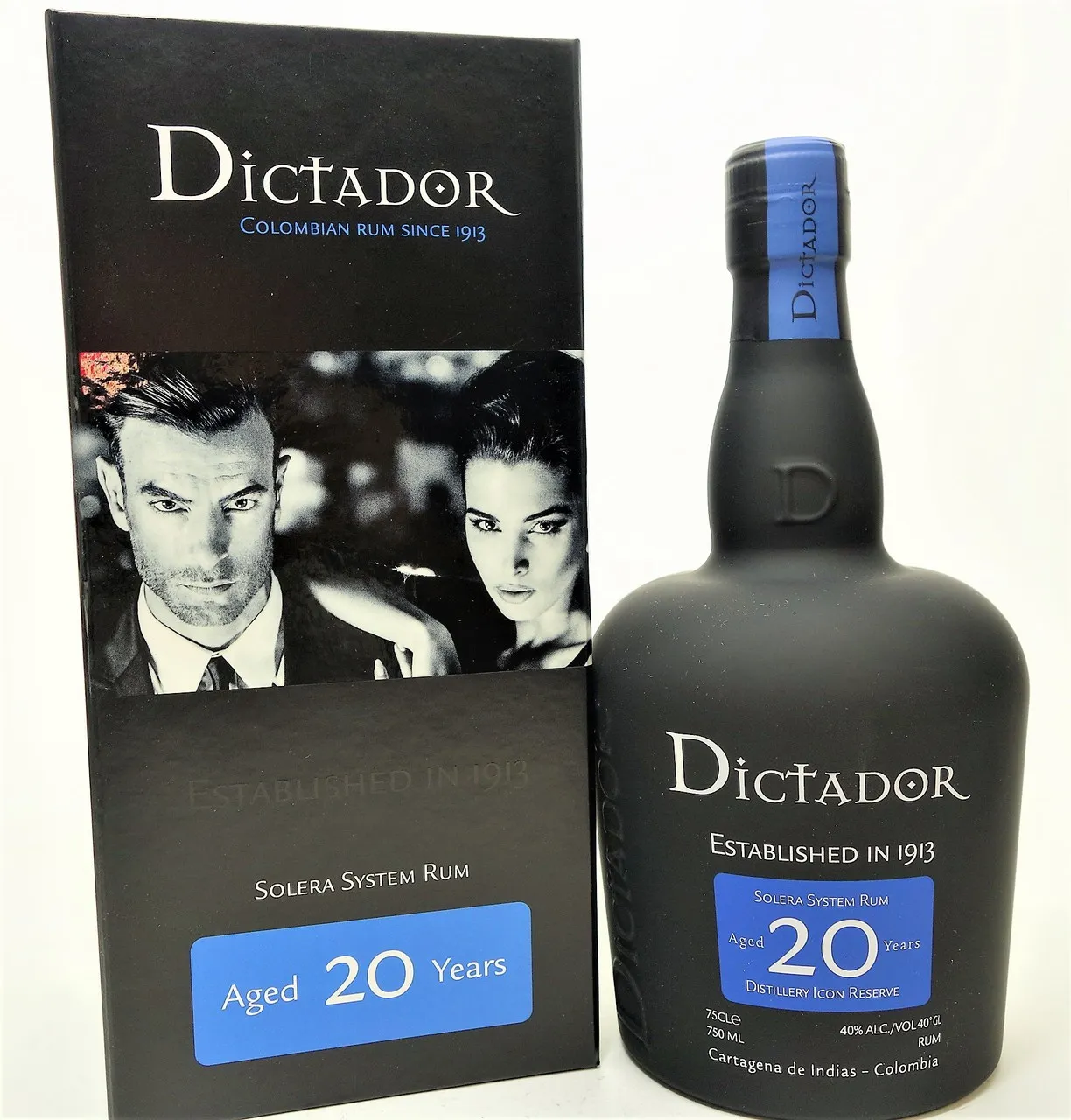
A bottle of Dictador 20.
If you have a keen eye, you may have noticed something unusual: Dictador rums claim to be aged in a solera system, yet they also feature concrete age statements. Sure, Zacapa slaps a big number on the front and hopes that you incorrectly assume that it represents the age of the liquid, but Dictador does not imply it; they outright state “aged 20 years”. What do Colombian regulations actually say about this?
Colombian Directive 1686 from 2012 is surprisingly strict on this matter: rum may not contain added flavorings or anything to simulate aging time.7 Furthermore, when rums of different ages are mixed, the declared age must be that of the youngest portion.7 This level of regulatory rigor should inspire confidence. So how does Dictador justify a “solera” rum with a 20-year age statement? According to Parra, it is all a simple misunderstanding:
No, it’s not like that. It does involve topping up, but with the same product. We just didn’t know what else to call the process so that everyone would understand what we meant. With the word “Solera,” however, people understand that the product is being “moved”—that it wasn’t produced using a “single cask” process.
- Hernán Parra2
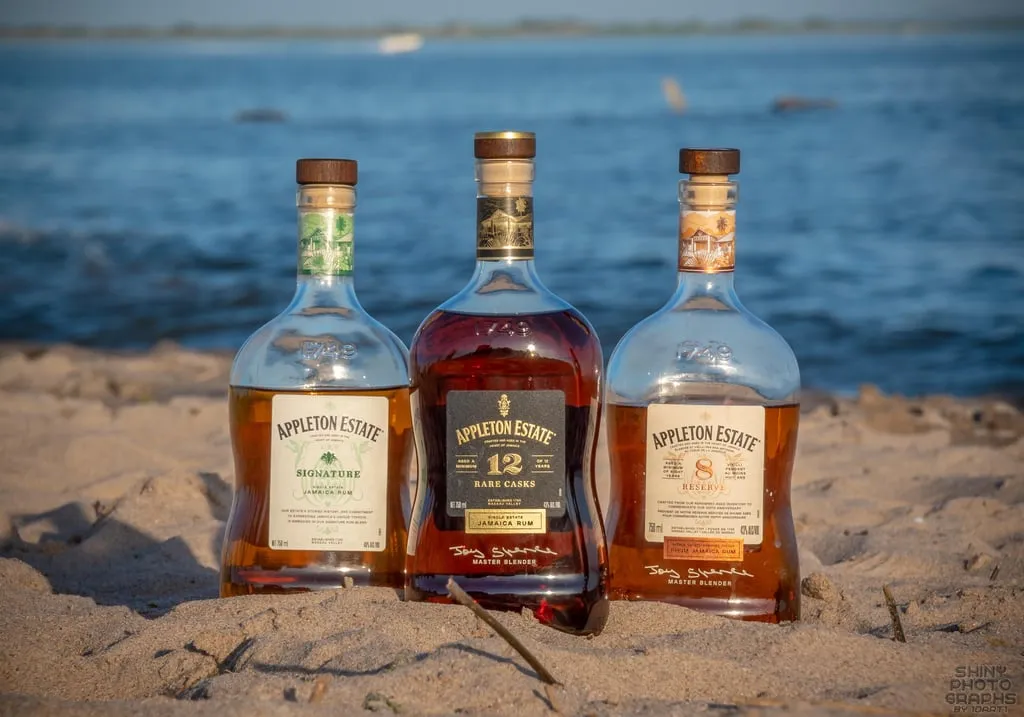
Behold! Three solera rums from Appleton Estate!
Sales director Diego Quintero Jaramillo echoed this exact sentiment in a virtual tasting video.8 The idea that they slap “solera” on the label as a genuine gesture of consumer transparency is hard to swallow. Consolidating rum of the same vintage is standard industry practice. I think that the word “solera” is used because it sounds fancy. But given how diluted the term has become in the rum world, this particular deception is practically par for the course. In the same interview, Jaramillo also noted that Parra prefers mixing his “40-year-old” rums with coke.8 Take that as you will.
The real issue is that their own marketing cannot keep the story straight. A quick search of online retailers reveals yet another contradiction: sites like Cask Cartel and Master of Malt sell Dictador 20 Year Old Rum with the description: Aged in a Solera system for between 14 and 24 years.910 The descriptions of their age statements are not even consistent across their own distribution channels.
Even if we generously accept the solera explanation, the inconsistencies pile up when examining evaporation losses. Marketing materials cite anywhere from a 10% annual loss to evaporation,11 to 4.5%,12 to 3.5%,4 or even 2%.2 This matters immensely when you are selling a rum that literally turned 50 years old this year for less than $200 retail.13 At a very conservative (and regionally low) 3.5% annual angel’s share, 1,000 barrels would yield fewer than 170 barrels after 50 years. That represents an extraordinary amount of evaporation, and an extraordinary amount of money left locked in a barrel for half a century.
For comparison, genuine 50-year-old Appleton Estate rum sells for several thousand dollars a bottle. Dictador’s 50-year-old releases, meanwhile, can be found for under $200.13 We are expected to believe that this unknown rum, produced in an opaque and poorly documented supply chain, somehow survives five decades on the equator, only to be sold for the same price as an unspecified rum bottled in a low-poly monkey?
The Lab Results
Dictador vehemently denies adding any additives, flavorings, or sugar.14 However, it is hard to verify this without a lab test. Thankfully, Cyril from DuRhum sent samples off to an independent lab. His interpretation of the analysis is that the low quantity of fusel alcohols (only 5g/hLAA) and 10g/hLAA aromatic extract corresponds to a very light rum with no pot still portion, which has been doped with flavoring to artificially enhance its character. Furthermore, Cyril interprets a 2.43% alcohol obscuration as corresponding to 10.4g/L of added sugar.4 The actual congener count of fewer than 90g/hLAA makes the earlier 3,000–4,000 figure even more baffling.
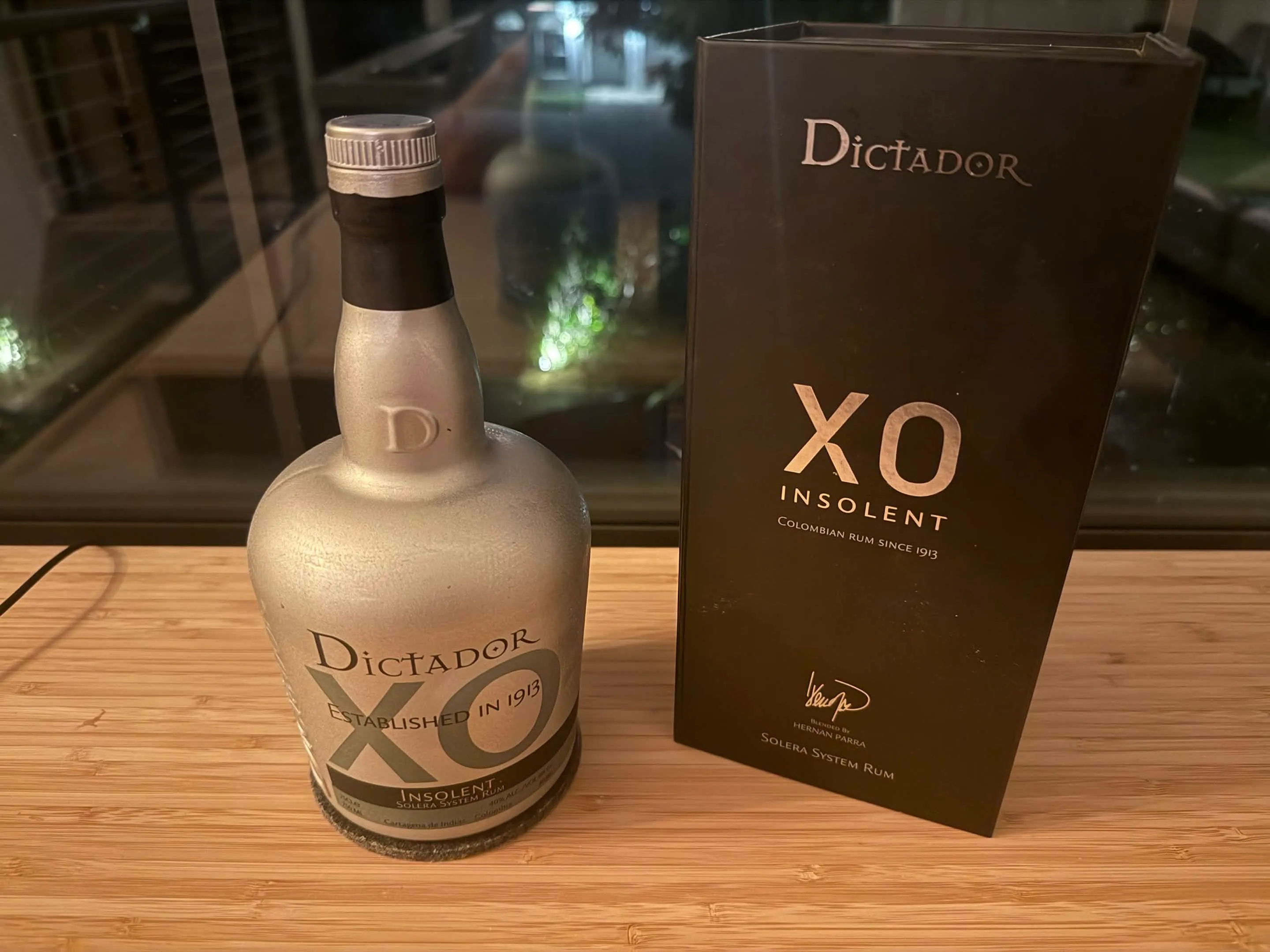
A freshly opened bottle of Dictador XO Insolent.
Cyril tested a different bottle labeled 44.5% ABV that measured at 38.6% ABV and demonstrated 17g/L of added sugar.4 I have my own hydrometer and refractometer (as detailed in my articles on hydrometers and refractometers), and I ran my own measurements on a fresh, newly opened bottle of Dictador XO Insolent. My hydrometer indicated a sugar equivalent of around 23g/L, and my refractometer indicated around 22g/L. My mouth isn’t exactly a lab, but it tastes quite sweet, on top of tasting distinctly chemical and artificial.
Why would they add artificial flavors and aromatics to the rum? Look again at the import records from Part 1. They are importing bulk ethyl alcohol. Do I have definitive, smoking-gun proof that they add flavorings and aromatics to this neutral alcohol? No. But they were once the subject of a debt collection suit by Polaroma Flavors and Fragrances.14 By this point, I hope you will forgive me for not extending Dictador the benefit of the doubt.
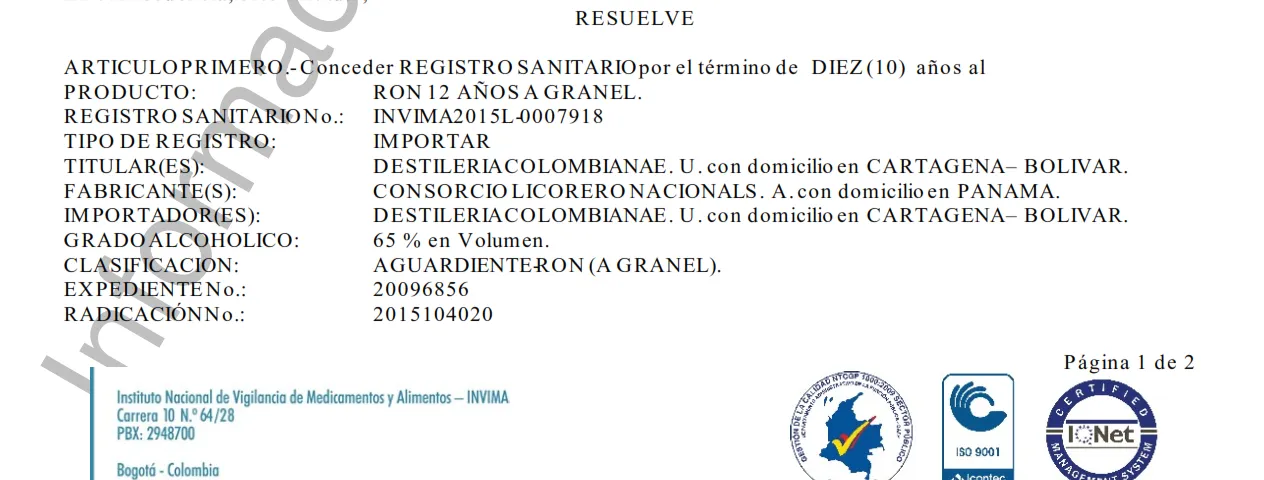
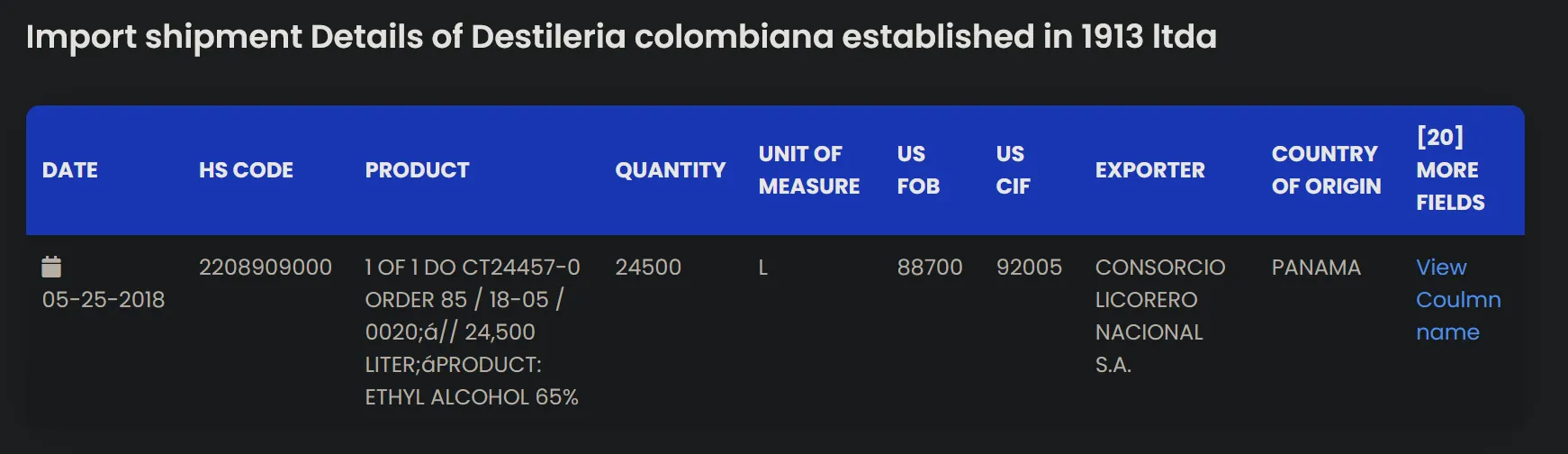
Import records discussed in part 1.
I don’t like chemical products in our rum; no additives, no added flavors, and no caramel coloring. I don’t think it’s necessary at all. And when you taste it, you notice it isn’t sweet. Because usually, a very sweet rum has had sugar or sugar alcohols, like glycerin, added to it before bottling. Here in Colombia, it is forbidden to add any sugar. However, there’s no way of knowing or proving exactly which ingredients someone is using. After all, the easiest way to mask a bitter, chemical, or unpleasant taste is with sugar to add. So, you can create a very poor-quality product and make it marketable by sweetening it. That is a very important concept for us, which is why our products contain no added sugar. We don’t need it. It would actually harm our products.
- Hernán Parra2
I emailed Dictador using the address listed on their “Contact Us” page with a detailed list of questions and requests for clarification in March, and again shortly before publishing this article.
They never replied.
You’re Too Poor For This Rum
If you have read this far, you likely realize that this rum is not for you. It never was. Sure, some rums are meant to be consumed, but this rum is first and foremost an investment vehicle.

The webpage for “investment-grade rum”, by the way.
On their website, they feature an entire section (written by AI, no less) on “investment-grade rum”. Ken Grier, owner of De-Still Creative, currently serves as a spirits investment consultant for the Dictador brand.15
Dictador has all the potential to drive this and to keep on building value through category leading innovations; relevant and contemporary arthouse pieces; the carefully curated cache of very old and authentic rums and the focus on scarcity, which appeals to collectors and investors around the world. Dictador truly has all the characteristics to become the investment grade leader in rum.
- Ken Grier15
Their Totem collection sells bottles hand-beaded with the Wixárika people’s most sacred plant for around $5,000 each.16 In 2018, Johnnie Walker commissioned the same bottles from the same company, sold them for a few hundred dollars each, and donated part of the proceeds to the Wixárika people.1718 Dictador claims to pay tribute to indigenous cultures, yet has not disclosed any contribution from that massive profit margin to the Wixárika community.16
Think you’ve finally cracked the “too poor for this rum” barrier and want in on the investment opportunity? Sorry, it’s invite-only.19 For a starting price of $1.5 million, the M-City golden bottle grants you a literal hunk of 24-karat gold, a ticket to Cartagena, and the privilege of filling it with your choice from 110 private casks. You can even have whatever city you want engraved on the side. Hell, at that price, would they deny you engraving the “S” we all doodled in middle school? The collection caps out once they hit $1 billion in sales.19 So, no need to rush.
Their NFT project might be the clearest proof that they are more concerned with promoting rum as a financial asset than selling actual rum. They created a DAO, planned to mint 20,000 NFTs with an estimated worth of $20 million, and announced that this collection had already achieved a value of $1.5 million!20 Wow, it already has $1.5 million in cash? No, it is “backed by an asset” worth $1.5 million… hmm, I wonder what that asset might be.
Checking the transaction history on OpenSea reveals that in the four years this collection has existed, it achieved a total volume of… two transactions, with a total trading volume of $771.21 That being said, though they fell well short of their 20,000 NFT, $20,000,000 goal, they did mint 85 NFTs. At a price of 0.51 ETH each,22 and with ETH prices around $900-$1,600 in 2022, that represents roughly $50,000 in gross proceeds. Not bad for a few JPEGs.
This model only works if there is a functioning secondary market. Whiskey has an established market with auction houses and decades of resale data. Despite Dictador’s best efforts, their bottles do not. I could not find a single piece of evidence that Dictador’s bottles have resold for any large amount of money. The only five-figure sale I could verify was a single charity auction, selling a bottle created specifically for that event.23 Their data shows a 17-fold increase in value, but they compare genuine benchmarks (Rare Whisky Apex 1000 and Macallan) against a metric that appears to be entirely invented, with no disclosed methodology.24 And with only $771 in observed secondary trading volume, there is little evidence of a functioning market for the NFTs, either.
This Rum Is Not For You
But in the end, the broader market simply doesn’t care. If anything in this article matters to you, this rum was never meant for you. It is for the undiscerning airport traveler looking for a gift with a big number on the front, ideally paired with a matching box of Dictador cigars and a bag of Dictador coffee. It is for the collector who wants a pretty bottle on their shelf. It might even be for my mom, whose bar order is always “whatever looks the prettiest”, which she then photographs from every angle and posts to Instagram.
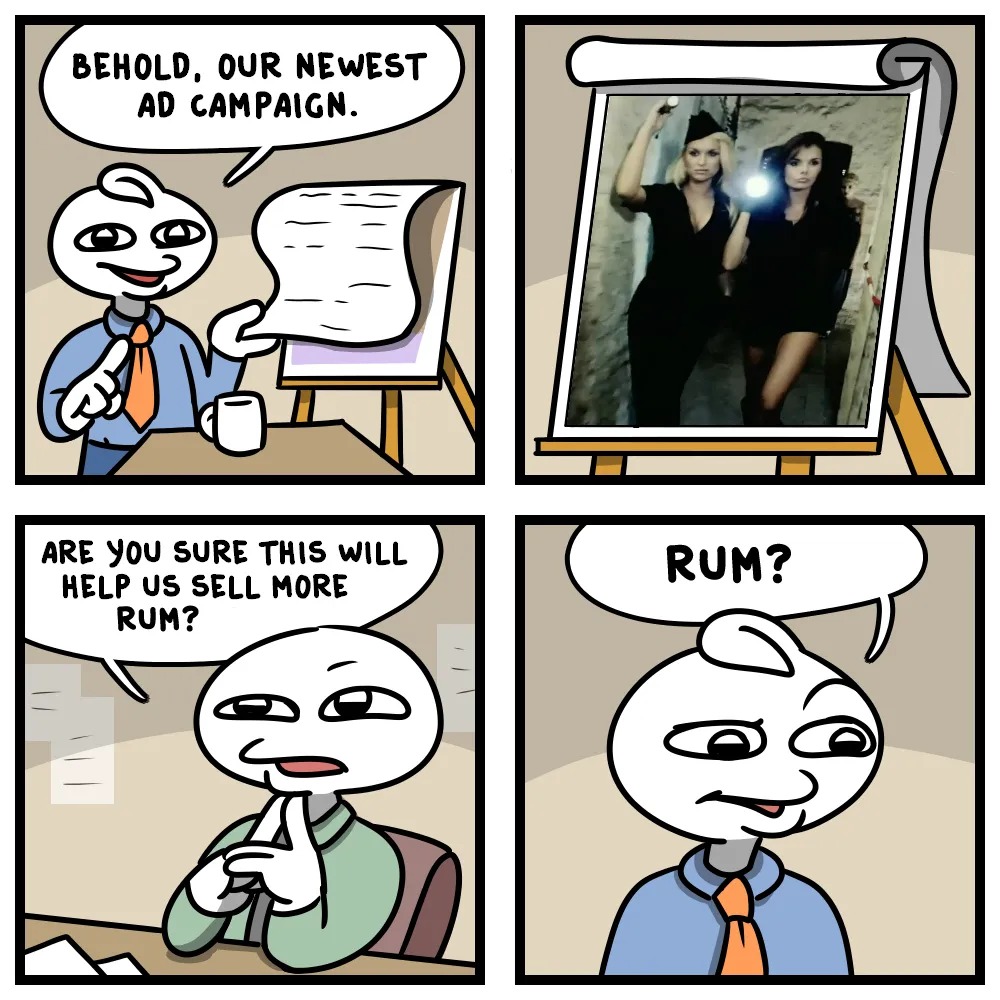
Meanwhile, you are the reader who cares about congeners, terroir, and transparency in manufacturing. Their marketing should have given it away: shiny gold bottles worth millions, videos of art influencers spraying graffiti, AI CEOs, NFTs, and commercials featuring good-looking dudes in suits casually lounging at a desk, surrounded by hot women fondling bottles.
To bolster this facade, Dictador launders its reputation through the “2 Masters” program. They send their rum to actual, well-known producers, such as Barton 1792, Royal Tokaji, Château d’Arche, and Leclerc Briant, to be finished, thereby renting a fraction of their credibility.25
They even have a “truths and myths about rum” section on their website. Think about the myths that actually bother you. Maybe it is the idea that white rum is unaged, or that the darker a rum is, the more aged and premium it must be. Maybe it is the general categorization of rum by its color. Maybe it is the casual misuse of “rhum agricole” to refer to all cane juice rums. Well, the very first question they answer on that page is: What Was the Most Expensive Rum Bottle Ever Sold? I bet that is exactly what you were wondering.
Ultimately, Dictador is not selling rum to people who read articles like this. It is selling vibes to people who don’t.
How Do They Keep Getting Away With This?
Independent voices like Rum Shop Boy, Ivar of Rum Revelations, and Cyril of DuRhum have all written excellent, critical pieces on Dictador. But none of them possess anything close to the reach of Forbes, The Spirits Business, or Medium. There is nowhere near enough critical press coverage to outweigh the brand’s mountain of marketing. And there is a lot of marketing.
Still a more realistic leader of Dictador than Severo Arango y Ferro.
Most importantly, the obscurity is working. I do not know who is really behind Dictador. I do not know what distilleries they actually operate. We have ample lab results, and while the Colombian government has no public regulatory findings against Destilería Colombiana Established in 1913 Ltda., the claims I could independently test fare poorly. The age statements are inconsistent, the production story contains unexplained contradictions, the historical narrative is unsupported by the records I found, the supply chain is a complicated web of corporate bureaucracy and foreign imports, and independent testing raises serious questions about the liquid itself.
However, no fraud or crimes have been proven in court. Dictador remains a relatively small brand, mostly relegated to Total Wine and airport duty-free shops, so it is entirely conceivable that they have simply flown under the radar. It took Zacapa being acquired by Diageo and achieving global popularity before facing legal challenges.26 Even then, they only recently decided to remove the prominent “23” from their bottles, and only in certain regions.
In the case of Dictador, I don’t think we should have to settle. I think that there are enough anomalies to warrant an investigation with actual statutory authorities.
Consider the precedent set in India. For years, it was an open secret among rum enthusiasts that Old Monk was largely neutral alcohol with rum flavoring added, and definitely not entirely aged for seven years. In my review of Old Monk, I said as much. I figured everyone knew, and Indian regulators simply didn’t care to pursue the issue as long as the tax revenue rolled in. Then, in August 2026, in a stunning move, India’s food safety regulator (FSSAI) banned the sale of Old Monk. They found that its aged component made up less than 5% of the blend, with the rest being neutral spirit and added flavoring sold as a standard, traditionally matured rum.27
It cannot be sold as a rum. Neutral spirit added with rum flavours is not a product which can be called as a rum. Terminology used is it mimics as a rum.
- Rajshekhar Govilkar, FSSAI27
McDowell’s was not spared either, and was similarly banned for mislabeling and the improper addition of artificial flavors.28 These are the top two best-selling rum brands in India, and yet regulators did not hesitate to take decisive action.29
Over the course of researching this piece, I filed formal information requests with INVIMA, the SIC, and the Cámara de Comercio de Cartagena. I did it anonymously, using nothing but a computer and Claude’s help to draft the requests in bureaucratic Spanish. You do not need to be an expert, and you do not need a lawyer. If you are American, the TTB takes label complaints. Dictador is sold in the US, meaning its labels are entirely within the TTB’s jurisdiction, regardless of the source country’s laws. If you are in France, send a complaint to the DGCCRF. You do not even have to be a Colombian citizen to file a complaint with INVIMA through the PQRSD process.
We consumers should not have to put up with false advertising, improper labeling, and the sale of adulterated products. The only difference between an open secret and a public scandal is somebody asking a government to look. Sometimes, all it takes to make a difference is to be that squeaky wheel.
And when it happens, I look forward to writing a Part 3.
Editor’s Note
This investigation relied on publicly available corporate records, import/export databases, lab analyses, and marketing materials. Dictador did not respond to requests for comment. Production figures and the current operational status of the facilities described by Dictador as its distilleries could not be independently verified.
Dictador was contacted in March 2026 with specific questions about their production methods and historical claims. They did not respond. They were contacted again in September 2026 with simply a request to discuss the production methods and historical claims with the proper point of contact, without asking any pointed questions immediately. They still have not responded.
Footnotes
-
CONSULTA DE PROCESOS NACIONAL UNIFICADA - 13001400300120090041200 ↩
-
Are Rare Rums The Newest Alternative Asset Class For Investors? - Forbes ↩ ↩2
-
Johnnie Walker acknowledges Wixáritari with special-edition whisky ↩
-
Dictador Unveils $1 Billion Rum Collection With Each Bottle Made of 24 Karat Gold and Starting at $1.5 Million - The Daily Pour ↩ ↩2
-
Dictador Partners with World-Class Wine and Spirits Masters to Create Unique Colombian Rums ↩
-
‘Made using rum flavouring’: FSSAI informs Bombay High Court Old Monk can’t be sold as rum ↩ ↩2
-
Diageo challenges India rum ban, arguing lack of due process ↩