
Analysis on glycerin in rum
Preface: If You Have Nothing to Hide…
For decades, we were sold wonderful stories from producers of premium rum, such as the idea that the smooth, rich character of their high-end bottles came purely from great molasses or “sugarcane honey”, slow aging, and traditional craftsmanship.
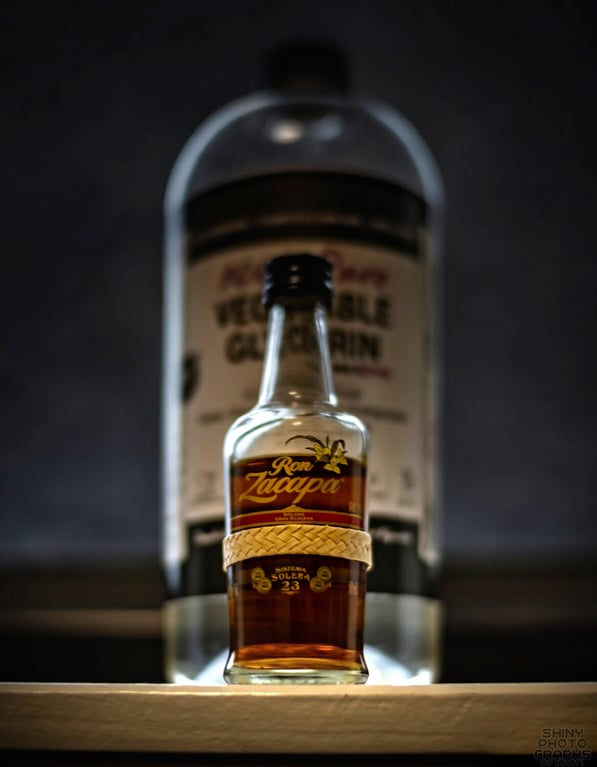
As most enthusiasts know by now, that illusion was pretty thoroughly shattered when people started testing their collections with hydrometers at home. DuRhum even backed this up with actual lab tests. It turned out that a lot of respected, premium rums were heavily dosed with additives. Zacapa 23, for example, measured 20g/L of added sugar! That is way beyond anything natural barrel aging could impart.1
Worse, sugar wasn’t the only thing they were hiding from consumers. Lab tests also showed that Zacapa 23 contained 0.2-0.4g/L of glycerin (aka glycerol). Glycerin acts as a sweetening agent, but, more importantly, it adds viscosity. It creates those thick “legs” on the side of the glass that people mistakenly associate with age and quality, and gives the spirit a rounded, oily mouthfeel, taking the harsh edges off of young alcohol. However, unlike sugar, there is no quick hydrometer test to see if a brand is slipping glycerin into your drink.
I started digging into this while writing reviews for Puntacana Club (by Oliver & Oliver). I had read Rum Revelation’s review suggesting they add glycerin, and The Fat Rum Pirate’s review of Zacapa 23 Etiqueta Negra, where he specifically noted: “Glycerin shouts out at me and it all smells a touch artificial.” That piqued my interest, because I had no idea what glycerin actually tasted or felt like in isolation. Was I just missing it? Did I even know what to look for? To figure it out, I decided to mess around with some at home.
The Experiment
For my control, I needed a rum that I knew was totally clean. I went with Kingston 62, a young, somewhat harsh column-still rum from Jamaica. Jamaican regulations strictly prohibit additives, so I treated it as my control.
The tricky part is that the amounts used by producers are tiny. The smallest pipette I have drops 0.025mL, which I dissolved into about 63mL of rum (roughly two shots) using 95% vegetable glycerin. Honestly, I didn’t think I’d even be able to tell the difference at these levels, but I mixed up four samples: 0g/L (control), 0.5g/L, 1g/L, and a heavy dose of 3g/L. I just wanted to see at what threshold I actually noticed a physical change in what I am tasting.
| X | 0g/L (control) | 0.5g/L | 1g/L | 3g/L |
|---|---|---|---|---|
| Viscosity (legs) | Zero legs. Forms a thin layer that evaporates quickly. | One or two legs begin to form on parts of the glass, but mostly evaporates quickly. | A lot of legs, all around the glass. | A thick, persistent curtain of legs. |
| Sweetness | Not sweet. A typical lightly aged white rum. | Not sweet. No perceptible change. | Maybe a bit more sweet, but the rum’s own vanilla/coconut flavors really pop. | Noticeably sweet, comparable to a rum with 10g/L of sugar. |
| Mouthfeel | Very liquidy. No body. | No change. Very liquidy. | Coats the mouth nicely. An oily texture emerges. | Coats the mouth nicely. Full, oily texture. |
| Harshness/Burn | Moderate burn. Not a sipper. | Moderate burn. No change. | Wow. Almost no burn. Very smooth. | No change. Almost no burn, very smooth. |
What did I actually learn from this?
Some changes were way more obvious than I expected, while others were pretty subtle.
Sweetness isn’t the main goal
Jumping up to 3g/L made the rum sweeter, but at lower doses I really couldn’t feel it. Glycerin isn’t nearly as sweet as sugar, so I highly doubt producers are using it primarily as a sweetener, especially since you’d need a lot of it, and there are much stronger artificial sweeteners (like sucralose) that can do the job in microscopic amounts.
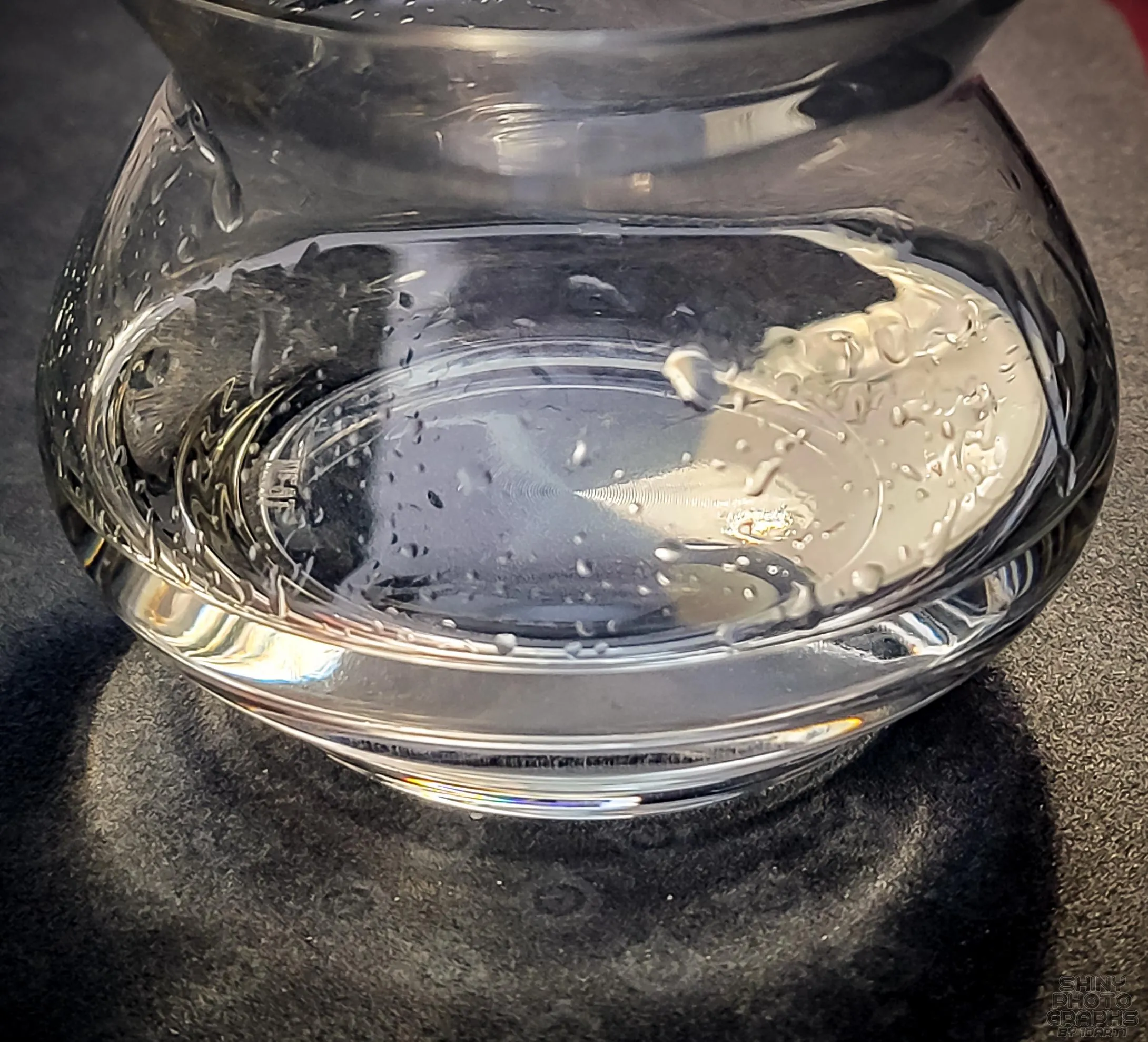
Kingston 62, no glycerin
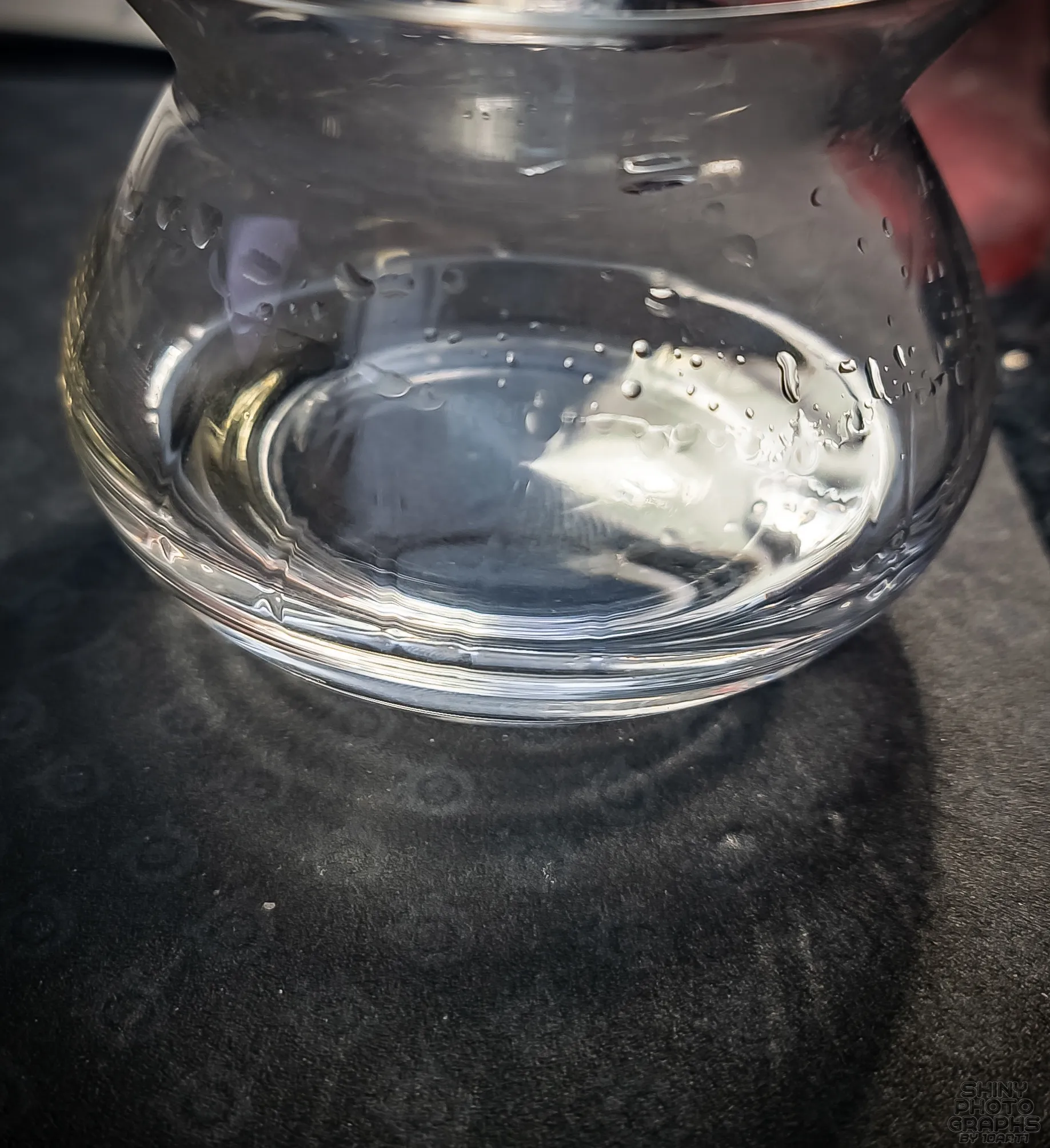
Kingston 62, 1g/L glycerin
The increased viscosity
This was the most obvious shift. Even at just 0.5g/L, a totally raw, watery white rum suddenly started forming legs. If you dropped that into a rum that already had a few years of real barrel age, it would easily push it into that thick, “premium” territory. I didn’t feel a difference in mouthfeel until 1g/L, which is a massive dose compared to what lab tests usually find. Interestingly, at 1g/L, I could taste the rum’s natural flavors better, probably just because the oily texture made it coat my tongue longer.
Taking the edge off
Glycerin didn’t magically make a young rum taste like a 15-year aged premium rum, but at 1g/L, it drastically cut the alcohol burn. It was a serious jump in perceived “smoothness.” Given that a lot of casual consumers equate “smoothness” with “quality,” it’s completely obvious why mass-market brands are tempted to sneak a little bit into their blends.
Can you actually detect glycerin at home?
As far as I can tell, not really.
Even at 3g/L, which is nearly ten times the amount found in the Zacapa lab tests, I didn’t pick up a distinct artificial, chemical, or “glycerin” taste. The only thing I noticed was a thicker, oilier spirit. Because you can also get a thick, oily spirit from natural aging, heavier distillates, or a higher ABV, trying to guess if a rum has glycerin based on taste or mouthfeel alone feels like it’s purely based on vibes.
There is maybe one visual cue you can look for, but again, take this with a massive grain of salt. If you have a rum that is low ABV (40% or under), very lightly aged, and completely dry (no added sugar), there is virtually no chemical reason for it to have thick legs. If you swirl it, and it clings to the glass like syrup instead of evaporating off in a thin film, perhaps something is up.
But even then, it’s rarely just glycerin. Rums that resort to glycerin usually use a bunch of additives, like sugar, meaning that if you see suspicious legs, sugar is probably having a greater effect anyway. So while heavy legs on a young, low-proof rum is suspicious, attributing it definitively to glycerin is impossible.
Footnotes
-
Scientific literature points to about 1.3g/L of glucose derived from barrels due to interactions with spirits. ↩